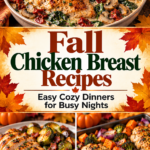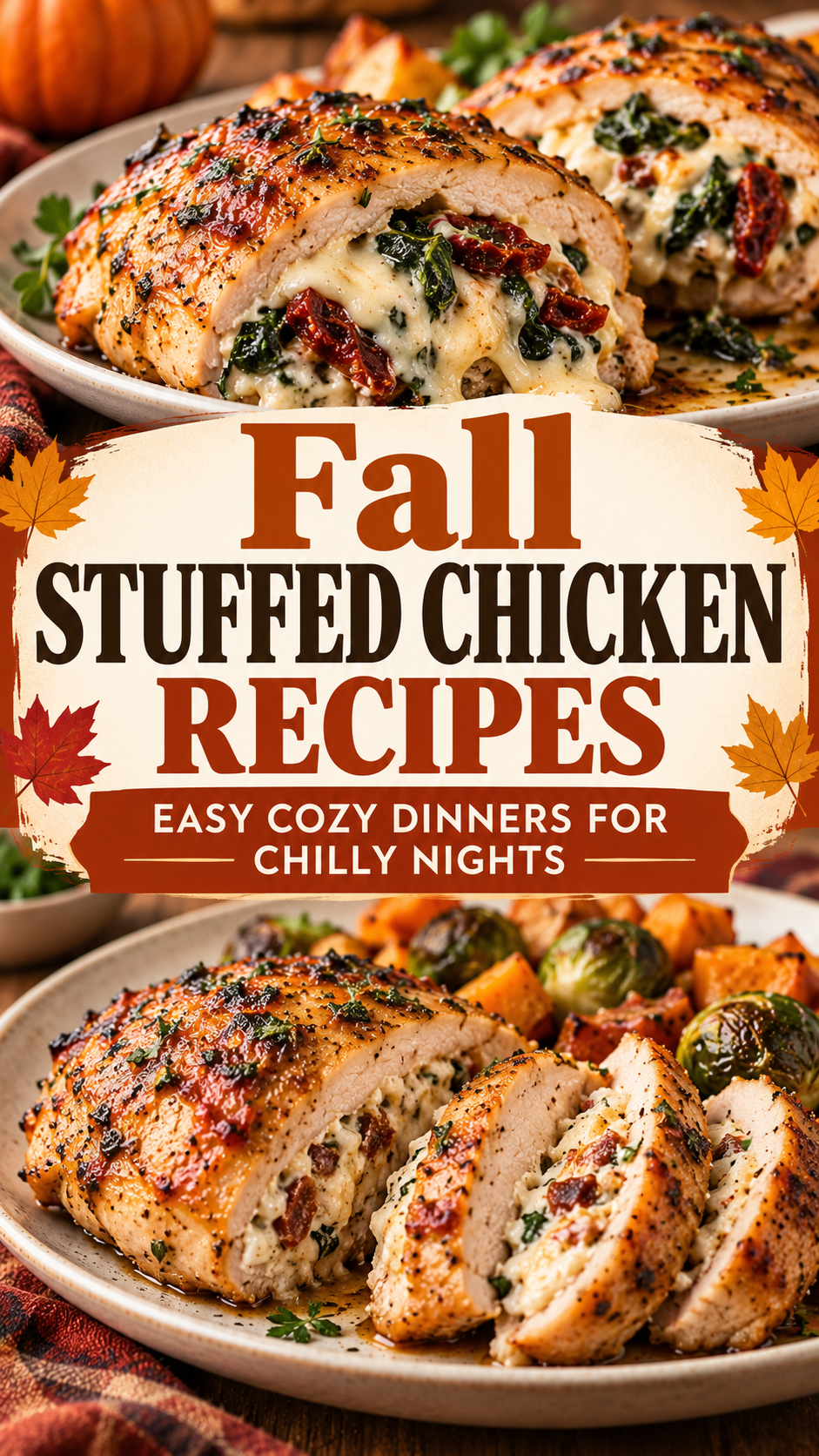
Stuffed chicken is one of those dinners that looks like you made considerably more effort than you actually did.
A plain chicken breast suddenly feels ready for a chilly fall evening once you tuck apples and cheddar, mushrooms and spinach, or cranberries and Brie inside. Add roasted vegetables or mashed potatoes and dinner has gone from ordinary Tuesday to something you could comfortably serve when people come over.
These five recipes use some of autumn’s best flavors while keeping the cooking practical.
What You’ll Need
Apple Cheddar Stuffed Chicken
- 4 boneless, skinless chicken breasts
- 1 crisp apple, thinly sliced
- 4 ounces sharp cheddar, sliced
- 1 teaspoon Dijon mustard
- 1 teaspoon dried thyme
- 1 tablespoon olive oil
- Salt and black pepper
Spinach Mushroom Stuffed Chicken
- 4 boneless, skinless chicken breasts
- 6 ounces mushrooms, chopped
- 2 cups fresh spinach
- 2 garlic cloves, minced
- 4 ounces cream cheese, softened
- 1 tablespoon olive oil
- 1/2 teaspoon thyme
- Salt and black pepper
Cranberry Brie Stuffed Chicken
- 4 boneless, skinless chicken breasts
- 4 ounces Brie, sliced
- 1/3 cup cranberry sauce
- 1 teaspoon chopped rosemary
- 1 tablespoon olive oil
- Salt and black pepper
Butternut Squash and Sage Stuffed Chicken
- 4 boneless, skinless chicken breasts
- 1 cup cooked butternut squash, finely diced
- 1/2 cup shredded mozzarella
- 1 tablespoon grated Parmesan
- 1 teaspoon chopped sage
- 1/2 teaspoon garlic powder
- 1 tablespoon olive oil
- Salt and black pepper
Caramelized Onion and Goat Cheese Stuffed Chicken
- 4 boneless, skinless chicken breasts
- 1 large yellow onion, thinly sliced
- 4 ounces goat cheese
- 1 teaspoon fresh thyme
- 1 tablespoon butter
- 1 tablespoon olive oil
- Salt and black pepper
Tools You’ll Need
- Large oven-safe skillet or baking dish
- Sharp knife
- Cutting board
- Mixing bowls
- Spoon
- Tongs
- Toothpicks, optional
- Instant-read thermometer
A sharp knife makes cutting the pockets much easier.
And keep that thermometer nearby. Stuffed chicken is thicker than a regular chicken breast, so appearance alone isn’t a particularly useful way to decide when dinner is finished.
Apple Cheddar Stuffed Chicken
Apple and cheddar already work beautifully together on a snack board. Putting them inside chicken gives you a surprisingly easy fall dinner.
Heat the oven to 400°F.
Carefully cut a deep pocket into the side of each chicken breast without slicing completely through.
Season inside and outside with salt, pepper, and thyme.
Spread a little Dijon inside each pocket, then add several apple slices and cheddar.
Don’t overfill them.
If half the cheese is hanging outside before cooking begins, the chicken has already submitted a warning.
Secure with toothpicks if necessary.
Heat olive oil in an oven-safe skillet. Brown the chicken for about 2 minutes per side.
Transfer to the oven and bake until the thickest part of the chicken and center of the stuffing reach 165°F, generally around 15 to 25 minutes depending on thickness.
Rest briefly before serving.
Spinach Mushroom Stuffed Chicken
This version goes in a completely different direction: savory, creamy, garlicky, and particularly good with mashed potatoes.
Heat the oven to 400°F.
Cook the mushrooms in a little olive oil until browned and most of their released moisture has evaporated.
Add garlic and spinach. Cook just until the spinach wilts.
Cool slightly, then combine with cream cheese and thyme.
Cut pockets into the chicken breasts and season them.
Divide the mushroom filling between the pockets.
Heat the remaining oil in an oven-safe skillet and brown the chicken on both sides.
Finish in the oven until the chicken and stuffing reach 165°F.
The important part here is cooking the mushrooms before stuffing.
Raw mushrooms release plenty of water. Skip that step and your carefully stuffed chicken may quietly develop an indoor swimming pool.
Stuffed Chicken Rules That Make Dinner Easier
Choose similar-sized breasts. They’ll finish cooking closer to the same time.
Cut a pocket, not two chicken pieces. Keep the opposite side intact so the filling has somewhere to stay.
Cook watery vegetables first. Mushrooms and spinach should lose excess moisture before becoming filling.
Don’t pack the pocket too tightly. A moderate amount of filling stays inside much more successfully.
Check the center with a thermometer. Chicken and the center of the stuffing should reach 165°F.
A little cheese escaping into the skillet is normal.
Consider it the cook’s portion rather than a structural failure.
Cranberry Brie Stuffed Chicken
This is the recipe for the point in fall when cranberries start appearing everywhere and nobody is quite ready to call dinner Thanksgiving yet.
Heat the oven to 400°F.
Cut pockets into the chicken and season with salt, pepper, and rosemary.
Add Brie and a small spoonful of cranberry sauce to each pocket.
Small is the important word.
Too much cranberry sauce will escape during cooking and begin establishing its own dinner elsewhere in the pan.
Secure the chicken with toothpicks if needed.
Sear in an oven-safe skillet with olive oil for about 2 minutes per side.
Bake until the chicken and stuffing reach 165°F, usually another 15 to 25 minutes depending on thickness.
Let the chicken rest for a few minutes before serving.
This one is especially good with roasted Brussels sprouts, wild rice, or green beans.
Butternut Squash and Sage Stuffed Chicken
Butternut squash brings sweetness without making the filling dessert-like, while sage gives the whole thing that unmistakable cold-weather flavor.
Heat the oven to 400°F.
Combine the cooked squash with mozzarella, Parmesan, sage, garlic powder, salt, and pepper.
Mash some of the squash while leaving a little texture.
Cut pockets into the chicken breasts.
Fill each one with the squash mixture and secure if needed.
Season the outside of the chicken.
Brown both sides in an oven-safe skillet with olive oil.
Move the skillet into the oven and cook until the chicken and stuffing reach 165°F.
Let it rest briefly before slicing.
This is also a useful way to use a small amount of leftover roasted squash.
You need one cup.
There is no reason to roast an entire second squash and accidentally begin a side project.
Caramelized Onion and Goat Cheese Stuffed Chicken
This one takes a little longer because onions refuse to be rushed.
Fortunately, most of that time involves occasional stirring rather than actual work.
Melt butter with a little olive oil over medium-low heat.
Add the onions with a small pinch of salt and cook for roughly 20 to 30 minutes, stirring occasionally, until deeply softened and golden.
Cool slightly.
Combine the onions with goat cheese and thyme.
Cut pockets into the chicken, season, and add the filling.
Sear the stuffed breasts in an oven-safe skillet, then bake at 400°F until both chicken and stuffing reach 165°F.
The filling is rich, so you don’t need much.
Serve with roasted broccoli, green beans, or a simple salad.
And don’t turn the heat up aggressively because the onions appear to be taking their time.
Burned onions and caramelized onions may eventually share a color family. Their flavor plans are considerably different.
Substitutions and Fall Variations
Once you understand the basic method, stuffed chicken is easy to change.
Swap cheddar for Gouda in the apple version.
Use pears instead of apples for a softer, slightly sweeter filling.
Feta can replace goat cheese.
No Brie? Camembert works in a similar style if available.
For the squash filling, pumpkin puree can work in a pinch, but use plain pumpkin puree, not pumpkin pie filling. Keep the quantity modest so the filling doesn’t become too wet.
You can also add chopped pecans to the cranberry filling or walnuts to the apple version.
For something more savory, try mozzarella with sautéed kale and mushrooms.
The easiest formula is one creamy or cheesy ingredient + one fall ingredient + herbs.
You don’t need apples, cranberries, squash, mushrooms, sage, maple, pecans, and three cheeses inside one chicken breast.
Fall dinner is allowed to show restraint.
Prep Ahead Without Making Dinner Complicated
Most of the fillings can be prepared earlier in the day.
Cook the mushrooms and spinach, caramelize the onions, or roast the squash ahead and refrigerate them promptly in covered containers.
You can also shred or slice the cheeses and measure seasonings.
For the simplest workflow, keep the raw chicken separate and cut and stuff it closer to cooking time.
If you do assemble stuffed chicken ahead, cover and refrigerate it promptly and cook it within a suitable refrigerated timeframe. Never leave raw stuffed chicken sitting at room temperature.
Stuffed chicken also works well for entertaining because the side dishes can stay simple.
Roast potatoes or vegetables while the chicken cooks and dinner has fulfilled its responsibilities.
No emergency casserole required.
Leftovers and Storage
Refrigerate cooked stuffed chicken within 2 hours, or within 1 hour when temperatures are above 90°F.
Store it in covered containers at 40°F or below and use leftovers within 3 to 4 days.
Reheat leftovers to 165°F.
A covered baking dish works well for reheating because it helps prevent the chicken from drying out. You can add a spoonful of broth before covering.
Some versions can also be sliced cold for sandwiches once properly chilled, though fillings such as Brie and squash are generally nicer warm.
Freezing is possible, but creamy fillings can change texture after thawing.
If you freeze leftovers, label them clearly.
“Chicken with something inside” will seem considerably less informative six weeks from now.
Frequently Asked Questions
How do I cut chicken breasts for stuffing?
Place the breast flat and carefully cut horizontally into the thick side, creating a deep pocket without slicing through the opposite edge.
What temperature should stuffed chicken reach?
Both the chicken and the center of the stuffing should reach 165°F before serving.
How do I stop the filling from falling out?
Avoid overfilling the chicken and secure the opening with toothpicks if necessary. A small amount of leakage is completely normal.
Can I make stuffed chicken ahead?
Yes. The fillings are particularly easy to prepare ahead. Keep all perishable ingredients properly refrigerated and raw chicken separate until you’re ready to assemble, or refrigerate assembled chicken promptly.
What sides go well with fall stuffed chicken?
Roasted sweet potatoes, Brussels sprouts, green beans, mashed potatoes, wild rice, roasted squash, and simple salads all work well.
Can I use chicken thighs instead?
Boneless thighs can be rolled around fillings, but the technique and cooking time will differ. Whatever cut you use, cook the chicken and stuffing to 165°F.
Wrapping Up
Stuffed chicken gives you an easy way to make a regular chicken dinner feel much more suited to chilly autumn nights.
Start with Apple Cheddar Chicken for something sweet and savory, or make Spinach Mushroom Chicken when creamy comfort food sounds better.
Cranberry Brie Chicken brings holiday flavor a little early, while Butternut Squash and Sage puts classic autumn ingredients to work. And the Caramelized Onion and Goat Cheese Chicken is worth the extra few minutes at the stove when you want something richer.
Keep the fillings simple, don’t overstuff the pockets, and use a thermometer rather than guessing when the chicken is ready.
A little melted cheese may escape.
Dinner will recover.
If you try one of these fall stuffed chicken recipes, leave a comment and tell me which filling you chose, or share any questions below.