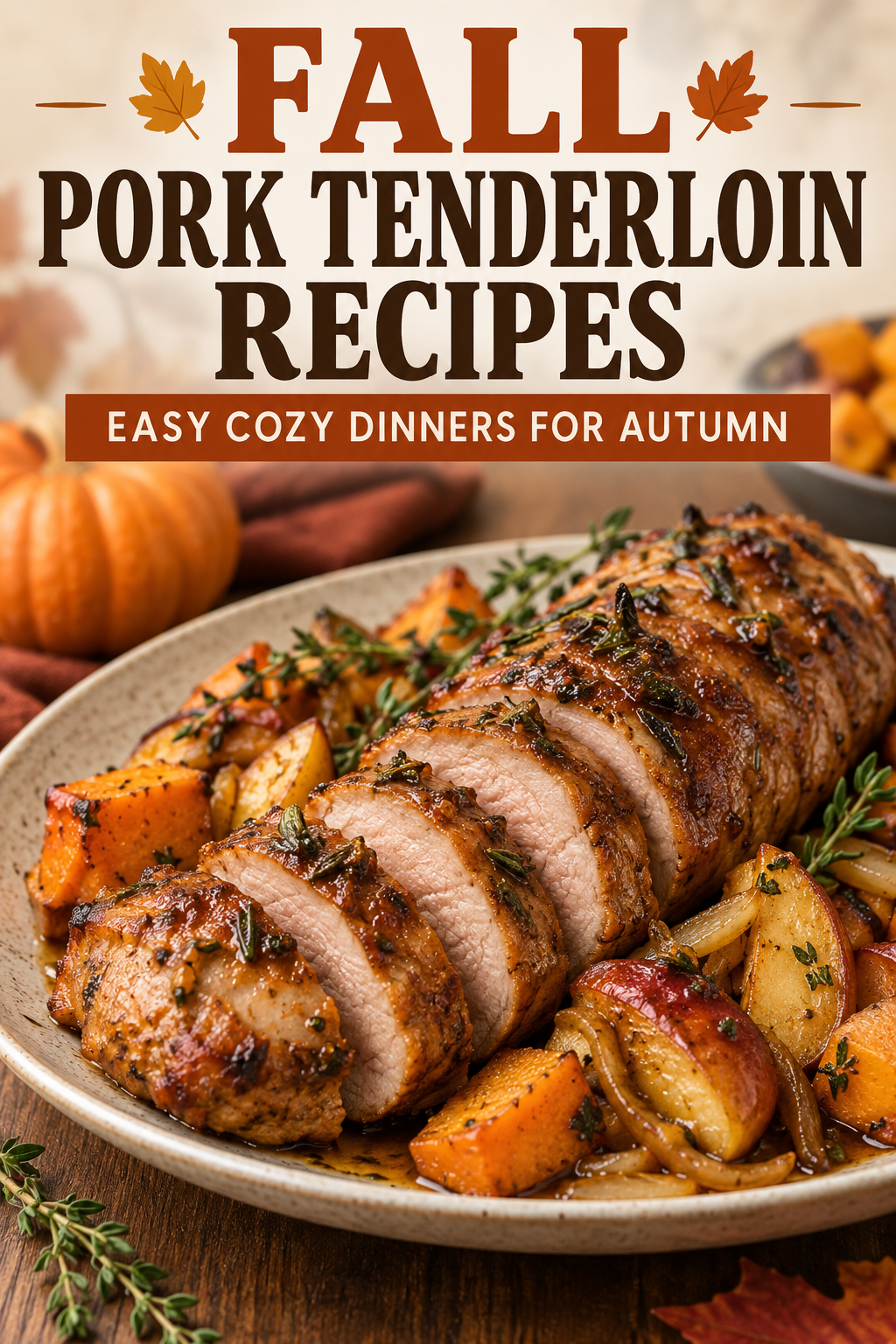
Pork tenderloin has a useful fall dinner advantage: it feels like a proper roast without requiring roast-level patience.
It cooks quickly, slices neatly, and works with nearly every flavor that starts showing up once autumn arrives. Apples, maple, Dijon, mushrooms, cranberries, sweet potatoes, sage, and rosemary all get along with it remarkably well.
The main thing pork tenderloin asks in return is that you don’t overcook it.
These five recipes give you cozy autumn dinners without turning a weeknight into an all-evening cooking project.
What You’ll Need
Apple Cider Dijon Pork Tenderloin
- 1 pork tenderloin, about 1 to 1 1/4 pounds
- 1 tablespoon olive oil
- 1/2 cup apple cider
- 1 tablespoon Dijon mustard
- 1 tablespoon maple syrup
- 2 garlic cloves, minced
- 1 teaspoon fresh thyme
- 1 tablespoon butter
- Salt and black pepper
Maple Rosemary Pork with Sweet Potatoes
- 1 pork tenderloin
- 2 medium sweet potatoes, cubed
- 1 small red onion, cut into wedges
- 2 tablespoons olive oil
- 2 tablespoons maple syrup
- 1 tablespoon Dijon mustard
- 1 teaspoon chopped rosemary
- 1/2 teaspoon garlic powder
- Salt and black pepper
Creamy Mushroom Pork Tenderloin
- 1 pork tenderloin
- 8 ounces cremini mushrooms, sliced
- 1 tablespoon olive oil
- 1 tablespoon butter
- 2 garlic cloves, minced
- 3/4 cup chicken broth
- 1/2 cup heavy cream
- 1 teaspoon thyme
- 1/3 cup grated Parmesan
- Salt and black pepper
Cranberry Balsamic Pork Tenderloin
- 1 pork tenderloin
- 1 cup fresh or frozen cranberries
- 1/3 cup chicken broth
- 2 tablespoons balsamic vinegar
- 2 tablespoons maple syrup
- 1 tablespoon olive oil
- 1 garlic clove, minced
- 1 teaspoon chopped rosemary
- Salt and black pepper
Sage Pork Tenderloin with Apples and Onions
- 1 pork tenderloin
- 2 apples, sliced into thick wedges
- 1 large yellow onion, sliced
- 1 tablespoon olive oil
- 1 tablespoon butter
- 1 teaspoon dried sage
- 1/2 teaspoon thyme
- 1/2 cup chicken broth
- Salt and black pepper
Tools You’ll Need
- Large oven-safe skillet
- Sheet pan
- Sharp knife
- Cutting board
- Mixing bowl
- Whisk
- Tongs
- Instant-read meat thermometer
That thermometer matters more than any fancy roasting equipment.
Pork tenderloin is naturally lean. Checking its temperature lets you stop cooking at the right moment instead of giving it another ten minutes “just in case” and assigning gravy an emergency rescue mission.
Apple Cider Dijon Pork Tenderloin
This one belongs near the top of the fall dinner rotation.
Apple cider gives the sauce sweetness and acidity, while Dijon keeps everything firmly on the savory side.
Heat the oven to 400°F.
Pat the pork dry and season with salt and pepper.
Heat olive oil in an oven-safe skillet over medium-high heat. Sear the tenderloin for about 2 minutes per side.
Whisk together apple cider, Dijon, maple syrup, garlic, and thyme.
Pour the mixture around the pork and transfer the skillet to the oven.
Roast for roughly 12 to 18 minutes, depending on thickness, until the pork reaches 145°F in its thickest part.
Transfer it to a board and let it rest for at least 3 minutes.
Meanwhile, simmer the sauce briefly on the stovetop and whisk in butter.
Slice the pork and spoon the cider-Dijon sauce over the top.
And yes, use apple cider rather than apple cider vinegar.
Half a cup of vinegar would give dinner a dramatically different autumn personality.
Maple Rosemary Pork with Sweet Potatoes
This recipe puts the whole autumn situation onto one sheet pan.
Heat the oven to 425°F.
Toss the sweet potatoes and onion with 1 tablespoon olive oil, salt, and pepper.
Spread them across a large sheet pan and roast for 15 minutes.
Meanwhile, combine the remaining olive oil with maple syrup, Dijon, rosemary, and garlic powder.
Brush the mixture over the pork.
Move the vegetables aside and place the tenderloin in the center of the pan.
Roast everything for another 15 to 20 minutes, checking the pork early. Remove it once the thickest section reaches 145°F.
Rest for at least 3 minutes before slicing.
If the vegetables need longer, return them to the oven while the pork rests.
Dinner is not synchronized swimming. The sweet potatoes are allowed to need another five minutes.
The Pork Tenderloin Rules That Matter
Remove the silver skin. That tough, shiny membrane doesn’t become tender during cooking.
Sear when you can. Browning adds plenty of flavor without adding much time.
Use a thermometer. Whole cuts of pork should reach 145°F followed by at least a 3-minute rest.
Remember that tenderloin and pork loin are different cuts. A pork loin is much larger and requires different cooking times.
Slice after resting. Cutting immediately lets more juice escape onto the board instead of staying in the meat.
Most importantly, don’t cook by color alone.
The thermometer gets the final vote.
Creamy Mushroom Pork Tenderloin
Mushrooms, thyme, cream, and pork make this the richest dinner of the five.
It’s particularly good with mashed potatoes, rice, or crusty bread because leaving mushroom sauce behind in the skillet would be poor kitchen management.
Heat the oven to 400°F.
Season the pork.
Heat olive oil in an oven-safe skillet and brown the tenderloin on all sides. Transfer it briefly to a plate.
Add butter and mushrooms.
Let the mushrooms brown before stirring too frequently. Constantly moving them mostly provides an excellent tour of the skillet.
Add garlic and thyme.
Pour in the broth, scraping up the browned bits.
Return the pork to the skillet and roast for about 12 to 18 minutes, until it reaches 145°F.
Rest the pork for at least 3 minutes.
Put the skillet over low heat and stir in cream and Parmesan. Simmer gently until slightly thickened.
Slice the pork and return it to the sauce for serving.
Cranberry Balsamic Pork Tenderloin
Cranberries don’t have to wait for Thanksgiving turkey.
Their tartness works particularly well with pork because it balances the maple syrup and balsamic instead of making the sauce simply sweet.
Heat the oven to 400°F.
Season the pork and sear it in olive oil in an oven-safe skillet.
Add cranberries, broth, balsamic vinegar, maple syrup, garlic, and rosemary around the tenderloin.
Transfer the skillet to the oven.
Roast for approximately 12 to 18 minutes, until the thickest part of the pork reaches 145°F.
Remove the tenderloin and rest for at least 3 minutes.
Place the skillet over medium heat and simmer the cranberry mixture until the berries burst and the sauce thickens slightly.
Taste before adding anything else.
If your cranberries are particularly tart, another teaspoon of maple syrup may be enough.
We’re balancing cranberry sauce, not quietly converting pork dinner into dessert.
Sage Pork Tenderloin with Apples and Onions
This one smells like fall before it reaches the table.
Heat the oven to 400°F.
Season the pork with sage, thyme, salt, and pepper.
Heat olive oil in an oven-safe skillet and brown the tenderloin on all sides. Remove it temporarily.
Add butter, onions, and apple wedges.
Cook for about 4 minutes, just until they begin taking on color.
Pour in the broth and return the pork to the center of the skillet.
Roast for 12 to 18 minutes, or until the pork reaches 145°F.
Rest it for at least 3 minutes before slicing.
The apples should be tender but still recognizable as apples.
Choose firm varieties such as Honeycrisp, Pink Lady, or Granny Smith rather than very soft apples that can disappear into the sauce.
Substitutions and Autumn Variations
These recipes are flexible enough to follow what you already have.
No fresh rosemary? Use a smaller amount of dried rosemary.
Pears can replace apples in the sage recipe.
Butternut squash can stand in for sweet potatoes, though cooking time will depend on cube size.
For the mushroom sauce, half-and-half can replace heavy cream for a lighter sauce, though it won’t be quite as rich.
Frozen cranberries work well in the cranberry balsamic recipe and usually don’t need thawing first.
You can also swap the seasonings between recipes.
Apple and rosemary work beautifully together. Cranberry likes thyme. Mushrooms can handle sage.
Just don’t combine maple, apples, cranberries, sweet potatoes, mushrooms, rosemary, sage, and cider into one skillet in the name of seasonal enthusiasm.
October does not require every fall ingredient to attend the same dinner.
Make-Ahead Tips
Pork tenderloin cooks quickly enough that I prefer roasting it shortly before serving.
The prep work can happen earlier.
Trim the pork and refrigerate it properly.
Mix the maple or cider sauces ahead.
Cube sweet potatoes.
Slice onions and mushrooms.
The cranberry sauce ingredients can also be measured and ready to go.
For the apple recipe, slice the apples closer to cooking so they don’t brown excessively.
If you want to prepare a full meal ahead, cook the pork, refrigerate it promptly, and reheat leftovers to 165°F. Keep in mind that reheated tenderloin can dry out more easily than freshly cooked pork.
A little sauce helps considerably.
Sauce has many responsibilities in autumn.
Leftovers and Storage
Refrigerate cooked pork within 2 hours, or within 1 hour when temperatures are above 90°F.
Store leftovers at 40°F or below in covered containers and use them within 3 to 4 days.
Reheat leftovers to 165°F.
Thinly sliced pork works well in sandwiches, grain bowls, salads, or alongside reheated roasted vegetables.
Creamy mushroom pork is particularly good over leftover mashed potatoes.
The cranberry version makes an excellent next-day sandwich with greens and a little Dijon.
You can freeze cooked pork, though sauced and unsauced portions may have different textures after thawing.
Label the container.
“Long pale thing from fall” is not particularly useful freezer documentation.
Frequently Asked Questions
What temperature should pork tenderloin reach?
Cook whole pork tenderloin to an internal temperature of 145°F, then allow it to rest for at least 3 minutes before slicing.
How long does pork tenderloin take in the oven?
At 400°F, a typical tenderloin often needs roughly 15 to 20 minutes after searing, but thickness varies. Use temperature rather than time alone to determine doneness.
Is pork tenderloin the same as pork loin?
No. Tenderloin is a smaller, narrow, very tender cut. Pork loin is larger and requires different cooking methods and times.
What fall flavors go well with pork tenderloin?
Apples, pears, cranberries, maple, Dijon, mushrooms, sage, rosemary, thyme, cider, squash, and sweet potatoes are all excellent options.
Can I prepare pork tenderloin the night before?
Yes. You can trim and season it ahead, keep it properly refrigerated, and prepare sauces or vegetables separately.
How do I keep pork tenderloin juicy?
Avoid overcooking it, check the thickest section with a thermometer, and give the meat its full resting time before slicing.
Wrapping Up
Pork tenderloin fits autumn particularly well because you can give it all the cozy flavors of a slow Sunday dinner without actually spending Sunday afternoon cooking it.
Make Apple Cider Dijon Pork when you want a quick pan sauce, or put Maple Rosemary Pork and Sweet Potatoes on one sheet pan for an easier weeknight dinner.
The Creamy Mushroom Tenderloin handles colder evenings, while Cranberry Balsamic Pork brings tart-sweet fall flavor without waiting for Thanksgiving. And Sage Pork with Apples and Onions keeps things simple and classic.
Whichever version you choose, keep the thermometer nearby and resist the urge to give lean pork another ten minutes for reassurance.
Dinner has already proved itself.
If you try one of these fall pork tenderloin recipes, leave a comment and tell me which one you made, or share any questions below.