There’s a point every fall when vegetables stop feeling like something that belongs next to dinner and start becoming dinner.
The zucchini and tomatoes of summer give way to butternut squash, sweet potatoes, Brussels sprouts, cauliflower, carrots, mushrooms, cabbage, and hearty greens. These are vegetables that actually appreciate a hot oven, plenty of garlic, browned butter, maple syrup, Parmesan, and all those herbs that suddenly make sense when the evenings get chilly.
And that’s what I like most about fall vegetable recipes.
They don’t need to feel light or obligatory.
Roast cauliflower until its edges are crisp. Turn butternut squash into creamy pasta. Bake sweet potatoes with black beans and cheese. Toss Brussels sprouts with apples and maple. Put a pan of vegetables in the oven and let them become the coziest part of dinner.
Here are some easy ideas worth making all autumn long.
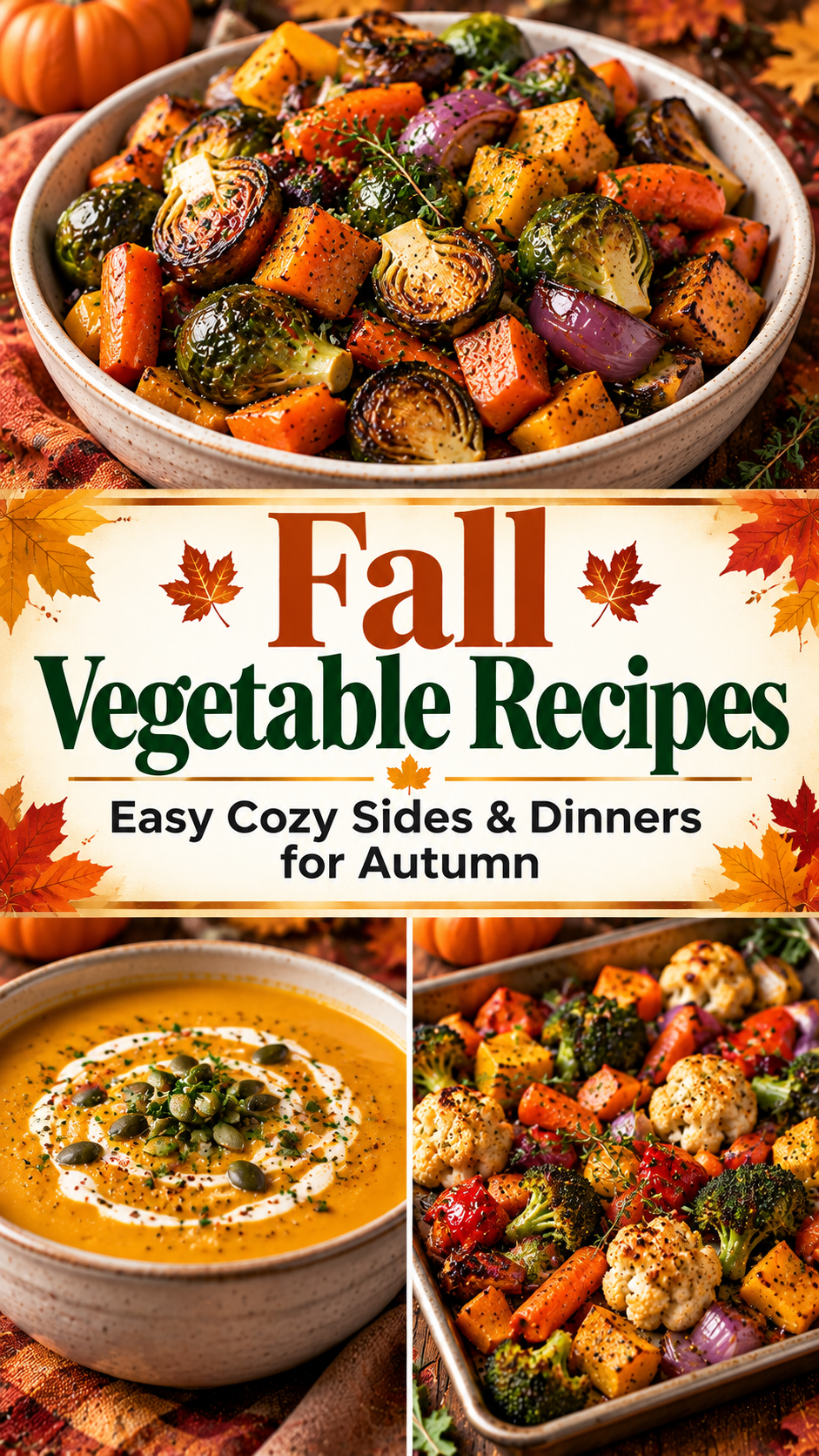
Start With the Fall Vegetable Tray I Make With Almost Everything
You could memorize one fall vegetable recipe and get a surprising amount of mileage from it.
This would be mine.
You’ll need:
- 1 small butternut squash
- 1 large sweet potato
- 3 carrots
- 1 pound Brussels sprouts
- 1 red onion
- 3 tablespoons olive oil
- 1 teaspoon dried thyme
- 1/2 teaspoon garlic powder
- Salt and black pepper
- 1 tablespoon maple syrup
- 1 tablespoon balsamic vinegar
Heat the oven to 425°F.
Peel the squash and sweet potato and cut them into roughly similar-sized pieces.
Slice the carrots.
Halve the Brussels sprouts and cut the onion into wedges.
Toss everything with olive oil, thyme, garlic powder, salt, and pepper.
Spread the vegetables across a large sheet pan.
If they’re piled on top of each other, use two pans.
That extra pan is worth washing.
Crowded vegetables tend to steam; vegetables with a little breathing room get those caramelized edges that make people start picking pieces directly from the baking sheet.
Roast for about 30 to 40 minutes, turning once, until everything is tender and nicely browned.
Mix the maple syrup and balsamic vinegar and drizzle it over the vegetables during the final few minutes.
That’s your basic autumn vegetable side.
Serve it with chicken tonight.
Put leftovers into a grain bowl tomorrow.
Add a fried egg and call it breakfast.
No vegetable police are coming.
Creamy Butternut Squash Pasta for a Meatless Fall Dinner
Butternut squash has a convenient trick: once roasted and blended, it becomes naturally creamy.
That makes it perfect for pasta.
For approximately 6 servings:
- 1 medium butternut squash
- 12 ounces pasta
- 2 tablespoons olive oil
- 2 tablespoons butter
- 3 garlic cloves
- 1/2 cup grated Parmesan
- 3/4 to 1 cup vegetable broth
- 1/4 teaspoon nutmeg
- 1 teaspoon fresh sage
- Salt and black pepper
Heat the oven to 425°F.
Peel, seed, and cube the squash.
Toss it with olive oil, salt, and pepper.
Roast until very tender and caramelized around the edges, approximately 25 to 35 minutes.
Meanwhile, cook the pasta according to the package directions.
Save about a cup of pasta water before draining.
Melt the butter in a skillet and gently cook the garlic and sage.
Blend the roasted squash with broth, Parmesan, nutmeg, and the garlic-butter mixture until smooth.
Pour the sauce into the skillet.
Add enough pasta water to loosen it into a silky sauce.
Toss with the cooked pasta.
Taste before adding additional salt because Parmesan brings plenty.
You can stop there.
Or add sautéed mushrooms, spinach, toasted walnuts, crispy sage, or cooked chicken.
The sauce tastes rich even though squash is doing most of the work.
It’s essentially macaroni and cheese’s autumn cousin who owns several very nice sweaters.
Maple Brussels Sprouts With Apples and Pecans
Brussels sprouts and apples belong together in fall.
One is earthy and slightly bitter.
The other is sweet and juicy.
Then maple syrup arrives and negotiates the relationship.
You’ll need:
- 1 1/2 pounds Brussels sprouts
- 1 crisp apple
- 2 tablespoons olive oil
- 1 tablespoon maple syrup
- 1 teaspoon Dijon mustard
- 1 teaspoon apple cider vinegar
- 1/3 cup toasted pecans
- Salt and black pepper
Heat the oven to 425°F.
Trim and halve the Brussels sprouts.
Toss them with olive oil, salt, and pepper.
Arrange them cut-side down on a baking sheet.
Roast for about 20 minutes.
Dice the apple and add it to the pan.
Continue roasting for another 8 to 10 minutes, until the sprouts are browned and the apple has softened slightly.
Whisk maple syrup, Dijon, and apple cider vinegar.
Drizzle the mixture over the warm vegetables.
Add toasted pecans immediately before serving.
This works beside roast chicken, pork tenderloin, meatloaf, or a holiday dinner.
For an everyday meal, serve it over farro or brown rice with crumbled goat cheese.
Suddenly the side dish has become dinner.
Crispy Parmesan Cauliflower
This is the recipe for anyone who claims cauliflower is boring.
Usually cauliflower isn’t boring.
Usually somebody boiled it.
You’ll need:
- 1 large head cauliflower
- 3 tablespoons olive oil
- 1/2 cup grated Parmesan
- 1/3 cup panko breadcrumbs
- 1 teaspoon garlic powder
- 1/2 teaspoon smoked paprika
- Salt and black pepper
- Chopped parsley
- Lemon wedges
Heat the oven to 425°F.
Cut the cauliflower into medium florets and dry them well.
Combine Parmesan, breadcrumbs, garlic powder, smoked paprika, salt, and pepper.
Toss the cauliflower with olive oil.
Add the Parmesan mixture and toss again until the florets are coated.
Spread them across a sheet pan without overcrowding.
Roast for approximately 25 to 30 minutes, turning once, until tender inside and crisp around the edges.
Finish with parsley and a squeeze of lemon.
Serve with chicken or salmon, or make the cauliflower part of a vegetarian grain bowl with quinoa, chickpeas, greens, and a creamy dressing.
The little crispy Parmesan bits left on the pan are technically part of the recipe.
At least that’s what I’m telling anyone who asks why I’m eating them before dinner.
Stuffed Sweet Potatoes for the Night You Don’t Want a Side Dish
A baked sweet potato is basically an edible dinner bowl.
This version combines sweet potato with black beans, corn, avocado, and cheese.
For four servings:
- 4 medium sweet potatoes
- 1 can black beans, drained and rinsed
- 1 cup corn
- 1 teaspoon cumin
- 1/2 teaspoon chili powder
- 1 cup shredded cheddar
- 1 avocado
- 1 lime
- Salsa
- Chopped cilantro or green onions
Heat the oven to 400°F.
Scrub the sweet potatoes and pierce them several times with a fork.
Bake until completely tender, usually around 45 to 60 minutes depending on their size.
Warm the black beans and corn with cumin and chili powder.
Cut open the baked sweet potatoes and fluff the centers.
Add black beans and corn.
Top with cheddar.
Return them to the oven briefly if you want the cheese completely melted.
Finish with avocado, salsa, lime, and cilantro.
This is one of those dinners where everyone can customize their own potato.
Add cooked ground beef or shredded chicken if you want meat.
Add jalapeños if you want heat.
Leave the cheese off and use a suitable alternative if you’re making them dairy-free.
The basic recipe is inexpensive, filling, and very difficult to mess up.
A useful combination on a Tuesday night.
Brown Butter Carrots With Thyme
Carrots don’t need much help in autumn.
Roast them until sweet, add brown butter and thyme, and stop interfering.
For 6 servings:
- 2 pounds carrots
- 1 tablespoon olive oil
- 4 tablespoons unsalted butter
- 1 teaspoon fresh thyme
- 1 tablespoon honey
- Salt and black pepper
Heat the oven to 425°F.
Peel the carrots if desired and cut thick ones lengthwise.
Toss with olive oil, salt, and pepper.
Roast for approximately 25 to 35 minutes, until tender and caramelized.
While they roast, melt the butter in a small saucepan.
Continue cooking until it foams and develops golden-brown flecks and a nutty aroma.
Watch carefully because browned butter can become burned butter surprisingly quickly.
Remove it from the heat.
Stir in thyme and honey.
Drizzle over the roasted carrots.
That’s all they need.
For a holiday-style version, add toasted pecans.
For a weeknight version, don’t.
Not every carrot requires formal attire.
Mushroom and White Bean Skillet
Now let’s move from side dishes to something substantial.
Mushrooms and white beans create a hearty skillet dinner that feels especially appropriate once the evenings cool down.
You’ll need:
- 1 pound cremini mushrooms
- 2 cans cannellini beans, drained and rinsed
- 2 tablespoons olive oil
- 1 tablespoon butter
- 1 small onion
- 3 garlic cloves
- 1 teaspoon fresh thyme
- 1/2 teaspoon dried rosemary
- 2 cups baby spinach
- 1/2 cup vegetable broth
- 1/3 cup grated Parmesan
- Black pepper
- Salt as needed
Slice the mushrooms.
Heat olive oil and butter in a large skillet over medium-high heat.
Add the mushrooms and let them brown properly before stirring too much.
Once they’re deeply colored, add the onion.
Cook until softened.
Add garlic, thyme, and rosemary.
Stir in the white beans and broth.
Simmer for several minutes so the beans absorb some of the flavor.
Add spinach and cook until wilted.
Finish with Parmesan and plenty of black pepper.
Serve with crusty bread.
If you’d like something creamier, add a splash of cream near the end.
If you want it lighter, leave the Parmesan out and finish with lemon juice.
Either way, it’s the kind of dinner that makes a bowl and a piece of bread feel like enough.
Don’t Forget Cabbage
Cabbage isn’t the glamorous member of the fall vegetable family.
It doesn’t appear in decorative baskets beside miniature pumpkins nearly as often as squash.
But it is inexpensive, filling, and excellent when roasted.
Cut a small cabbage into thick wedges.
Brush with olive oil.
Season with salt, pepper, garlic powder, and smoked paprika.
Roast at 425°F until tender with deeply browned edges, turning carefully once.
Finish with Dijon vinaigrette or Parmesan.
That’s it.
You can also roast cabbage alongside sausages for an easy sheet-pan dinner.
Or sauté shredded cabbage with apples and onions and serve it with pork chops.
A head of cabbage can sit patiently in the refrigerator while your spinach begins making questionable life choices after three days.
That’s worth appreciating.
Build a Fall Vegetable Grain Bowl
This is one of the best uses for leftover roasted vegetables.
Start with a grain:
Brown rice, quinoa, farro, barley, or couscous.
Add roasted vegetables.
Then add something substantial:
- Chickpeas
- White beans
- Lentils
- Chicken
- Tofu
- A cooked egg
Add something fresh or crunchy:
- Apple
- Arugula
- Pumpkin seeds
- Pecans
- Dried cranberries
Then add a simple dressing.
One easy fall dressing combines Dijon mustard, maple syrup, apple cider vinegar, olive oil, salt, and pepper.
Don’t worry about making every bowl identical.
This is leftover management disguised as meal planning.
And it works extremely well.
The Best Fall Vegetables to Keep Around
You don’t need to buy everything autumn has to offer.
I usually think in three groups.
Long-lasting vegetables: butternut squash, sweet potatoes, carrots, cabbage, onions.
These are useful because you don’t have to cook them immediately.
Quick-cooking vegetables: Brussels sprouts, cauliflower, broccoli, mushrooms.
These are excellent for weeknight roasting and skillet meals.
Greens: kale, spinach, Swiss chard.
Add these toward the end of soups, pasta dishes, curries, and skillets.
Then keep garlic, lemons, Parmesan, broth, and a few herbs around.
With those ingredients, you’re rarely very far from dinner.
Three Sauces That Change the Same Roasted Vegetables
If you roast vegetables frequently, changing the sauce keeps them from feeling repetitive.
For a maple-Dijon finish, whisk maple syrup, Dijon mustard, apple cider vinegar, and olive oil.
For lemon Parmesan vegetables, add lemon juice, grated Parmesan, black pepper, and parsley after roasting.
For something creamy, mix Greek yogurt with lemon, garlic, salt, and a little olive oil.
Make the exact same tray of cauliflower, carrots, Brussels sprouts, and sweet potato three different weeks.
Change the sauce.
Nobody needs to know how little innovation actually occurred.
A Simple Fall Vegetable Soup Formula
Soup is another useful destination for vegetables that need to be used.
Start by cooking onion, carrot, and celery in olive oil.
Add garlic.
Then add approximately:
- 6 cups broth
- 1 can diced tomatoes
- 1 can beans
- 4 to 5 cups chopped vegetables
- Herbs such as thyme or rosemary
Bring everything to a boil, then reduce to a simmer and cook until the vegetables are tender.
Add kale or spinach near the end.
You can include pasta, barley, or rice if you want something more substantial.
Finish with Parmesan.
There isn’t one mandatory combination.
Try carrots, sweet potatoes, kale, and white beans.
Or cauliflower, cabbage, carrots, and chickpeas.
Soup is particularly forgiving of the vegetable drawer.
How to Make Fall Vegetables Taste Better
The first trick is simple:
Use enough heat.
For roasting, 400°F to 425°F works well for many vegetables.
The second trick is space.
If vegetables are piled together, moisture gets trapped and they steam instead of brown.
The third is contrast.
Sweet vegetables like carrots and squash benefit from something sharp—mustard, vinegar, lemon, or salty cheese.
Earthy vegetables like mushrooms benefit from herbs and butter.
Bitter vegetables like Brussels sprouts work beautifully with a touch of maple or honey.
And almost everything benefits from a little texture.
Try toasted nuts, breadcrumbs, pumpkin seeds, crispy onions, or Parmesan.
The vegetable itself doesn’t need to change.
The finishing touches do most of the work.
Prep Once, Eat Vegetables All Week
If you’re trying to make weeknight dinners easier, roast a large batch of vegetables at the beginning of the week.
Keep the seasoning fairly simple—olive oil, salt, pepper, and perhaps garlic.
Then use them differently.
Night one: Serve them beside roast chicken.
Night two: Add them to pasta with Parmesan.
Night three: Put them into grain bowls.
Lunch: Add them to wraps or salads.
Weekend: Turn what’s left into soup.
Store cooked vegetables promptly in covered containers in the refrigerator.
Most cooked leftovers are best used within 3 to 4 days.
It’s not complicated meal prep.
It’s simply cooking enough vegetables that tomorrow’s dinner has already started.
Fall Vegetable Questions
What vegetables are best in fall?
Butternut and other winter squash, sweet potatoes, carrots, Brussels sprouts, cauliflower, cabbage, mushrooms, beets, broccoli, and hearty greens are all excellent choices for autumn cooking.
What’s the easiest way to cook fall vegetables?
Roasting is difficult to beat. Toss vegetables with oil and seasonings, spread them on a sheet pan, and roast until tender and browned.
Can I roast several vegetables together?
Yes, but consider their cooking times and cut slower-cooking vegetables into smaller pieces. You can also add quick-cooking vegetables later.
How do I make vegetables into a complete dinner?
Add protein and something substantial. Beans, lentils, tofu, eggs, chicken, grains, pasta, or cheese can turn roasted vegetables into a full meal.
What flavors work well with autumn vegetables?
Sage, thyme, rosemary, garlic, maple, Dijon, balsamic vinegar, apples, cranberries, Parmesan, pecans, walnuts, and brown butter all work beautifully.
What I’d Cook First
For a Sunday dinner, I’d make the big tray of maple-balsamic roasted vegetables and serve it beside roast chicken.
For a cold weeknight, I’d choose the Creamy Butternut Squash Pasta.
If I wanted dinner without meat, the Mushroom and White Bean Skillet would be my pick.
And if I had a refrigerator full of odds and ends?
Everything would become soup.
That’s the nice thing about fall vegetables.
They don’t require complicated recipes to feel cozy. Give them a hot oven, enough room to brown, a little garlic, and something salty, sweet, tangy, or crunchy at the end.
Suddenly the vegetables aren’t the thing you’re eating because you should.
They’re the part of the fall dinner everyone reaches for again.