Cauliflower has a useful talent at Thanksgiving.
It can stay light and crispy when the rest of the plate is getting heavy, or it can go completely the other direction and become creamy, cheesy comfort food.
Both approaches have their place.
The trick is giving cauliflower enough flavor and enough heat. Undercooked cauliflower tastes raw and forgettable. Overcooked cauliflower gets soft, watery, and starts making the whole kitchen smell more enthusiastic than necessary.
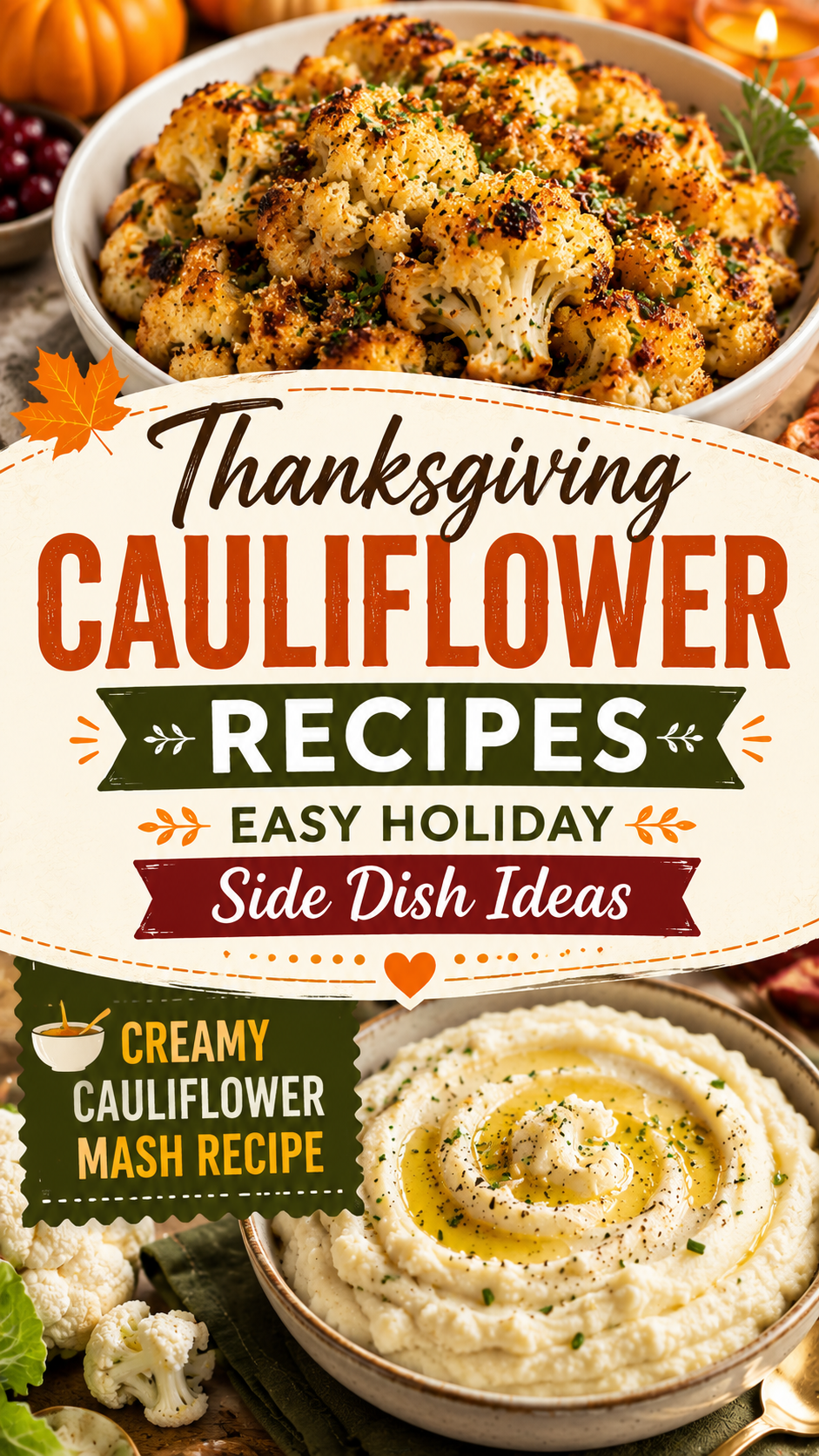
For these Thanksgiving cauliflower recipes, we’re making garlic Parmesan roasted cauliflower, brown butter herb cauliflower, creamy cauliflower gratin, maple Dijon roasted cauliflower, and crispy cranberry pecan cauliflower.
Five holiday sides ranging from simple and savory to full casserole territory.
What You’ll Need
Garlic Parmesan Roasted Cauliflower
- 2 large heads cauliflower, about 3 pounds total
- 3 tablespoons olive oil
- 4 garlic cloves, minced
- 1 teaspoon dried thyme
- 3/4 teaspoon salt
- 1/2 teaspoon black pepper
- 3/4 cup finely grated Parmesan
- 1 tablespoon fresh lemon juice
- 1 teaspoon lemon zest
- 2 tablespoons chopped fresh parsley
Brown Butter Herb Cauliflower
- 2 large heads cauliflower, cut into florets
- 2 tablespoons olive oil
- 4 tablespoons unsalted butter
- 1 teaspoon fresh thyme leaves
- 1 teaspoon finely chopped fresh rosemary
- 1/2 teaspoon dried sage
- 3/4 teaspoon salt
- 1/4 teaspoon black pepper
- 1 tablespoon fresh lemon juice
- 1/3 cup toasted sliced almonds
Creamy Cauliflower Gratin
- 2 large heads cauliflower, cut into florets
- 3 tablespoons unsalted butter
- 3 garlic cloves, minced
- 3 tablespoons all-purpose flour
- 2 cups whole milk
- 1/2 cup heavy cream
- 1 teaspoon Dijon mustard
- 1/2 teaspoon dried thyme
- 1/4 teaspoon ground nutmeg
- 3/4 teaspoon salt
- 1/4 teaspoon black pepper
- 1 1/2 cups shredded Gruyère
- 1/2 cup grated Parmesan
- 3/4 cup panko breadcrumbs
- 2 tablespoons melted butter
Maple Dijon Roasted Cauliflower
- 2 large heads cauliflower, cut into florets
- 3 tablespoons olive oil
- 1 1/2 tablespoons pure maple syrup
- 1 tablespoon Dijon mustard
- 1 tablespoon apple cider vinegar
- 1/2 teaspoon garlic powder
- 1/2 teaspoon dried thyme
- 3/4 teaspoon salt
- 1/4 teaspoon black pepper
- 2 tablespoons chopped fresh parsley
Cranberry Pecan Roasted Cauliflower
- 2 large heads cauliflower, cut into florets
- 3 tablespoons olive oil
- 3/4 teaspoon salt
- 1/4 teaspoon black pepper
- 1/2 teaspoon dried rosemary
- 1/2 cup dried cranberries
- 1/2 cup chopped pecans
- 1 tablespoon pure maple syrup
- 1 tablespoon apple cider vinegar
- 1 teaspoon orange zest
- 2 tablespoons chopped fresh parsley
Tools You’ll Need
Nothing unusual here.
You’ll need:
- Large baking sheets
- 9×13-inch baking dish
- Large pot
- Large mixing bowls
- Medium saucepan
- Small saucepan
- Whisk
- Wooden spoon
- Rubber spatula
- Chef’s knife
- Cutting board
- Measuring cups and spoons
- Cheese grater
- Citrus zester
- Colander
- Aluminum foil
1. Garlic Parmesan Roasted Cauliflower
This is the cauliflower recipe to make when the Thanksgiving table already contains plenty of creamy casseroles.
It is savory, crisp around the edges, and brightened with lemon at the end.
Preheat the oven to 425°F.
Cut the cauliflower into medium florets.
Try to keep them similar in size.
Place the cauliflower in a large bowl.
Add olive oil, garlic, thyme, salt, and black pepper.
Toss thoroughly.
Spread across one or two large baking sheets.
Do not crowd the pan.
Roast for 20 minutes.
Turn the cauliflower.
Sprinkle Parmesan over the florets.
Return to the oven for another 8 to 12 minutes.
The cauliflower should be tender with deeply browned edges.
Finish with lemon juice, lemon zest, and parsley.
Serve immediately.
The lemon may seem like a small addition beside garlic and Parmesan.
It isn’t.
That little hit of acidity keeps the whole dish from feeling heavy.
2. Brown Butter Herb Cauliflower
Brown butter is a very efficient Thanksgiving ingredient.
You do one extra thing to regular butter and suddenly everyone assumes you have been working considerably harder.
Here we’re pairing it with thyme, rosemary, sage, and roasted cauliflower.
Preheat the oven to 425°F.
Place the cauliflower florets in a large bowl.
Add olive oil, salt, and black pepper.
Toss.
Spread over a baking sheet in a single layer.
Roast for 25 to 30 minutes, turning once.
The cauliflower should be nicely browned.
Make the Brown Butter
While the cauliflower roasts, melt the butter in a small saucepan over medium heat.
Continue cooking.
It will foam first.
Then small brown flecks will begin appearing on the bottom.
Once the butter smells nutty and turns golden brown, remove it from the heat.
Immediately add thyme, rosemary, and sage.
Stir.
Add the lemon juice.
Transfer the roasted cauliflower to a serving bowl.
Drizzle with the brown butter.
Add toasted almonds.
Toss gently.
Serve warm.
Don’t walk away while browning butter.
It spends several minutes doing almost nothing and then makes several important decisions at once.
Pro Tips for Better Thanksgiving Cauliflower
Dry cauliflower thoroughly. Water on the florets creates steam and slows browning.
Use enough baking-sheet space. If the florets are piled together, use a second pan.
Roast at high heat. 425°F gives cauliflower time to brown before it becomes overly soft.
Keep florets similar in size. Tiny pieces burn while giant ones stay firm.
Add finishing ingredients at the right time. Fresh herbs, citrus, toasted nuts, and delicate glazes are usually better near the end.
3. Creamy Cauliflower Gratin
Now we move to the opposite end of the cauliflower spectrum.
This one has cream.
Gruyère.
Parmesan.
And buttery breadcrumbs.
Nobody will confuse it with a light vegetable side.
Preheat the oven to 375°F.
Grease a 9×13-inch baking dish.
Bring a large pot of salted water to a boil.
Add the cauliflower.
Cook for only 3 to 4 minutes.
The florets should still be fairly firm.
Drain very well.
Let them sit in the colander for several minutes so excess steam can escape.
Transfer to the baking dish.
Make the Cheese Sauce
Melt 3 tablespoons butter in a saucepan over medium heat.
Add garlic.
Cook for 30 seconds.
Add flour.
Whisk continuously for about 1 minute.
Gradually pour in the milk while whisking.
Add the cream.
Continue cooking for several minutes until the sauce thickens slightly.
Stir in Dijon mustard, thyme, nutmeg, salt, and black pepper.
Reduce the heat.
Add Gruyère and Parmesan.
Stir until melted.
Pour the cheese sauce over the cauliflower.
Mix the panko with 2 tablespoons melted butter.
Scatter it over the casserole.
Bake for 20 to 25 minutes, until bubbling.
For a darker topping, broil briefly at the end.
Let the gratin rest for about 10 minutes before serving.
The short blanching time matters.
If you fully cook the cauliflower before it enters the oven, it has nowhere useful left to go.
4. Maple Dijon Roasted Cauliflower
Cauliflower doesn’t have the natural sweetness of carrots or squash.
That makes it surprisingly good with a small amount of maple.
The important words there are small amount.
Dijon and apple cider vinegar keep the glaze firmly in savory territory.
Preheat the oven to 425°F.
Place the cauliflower in a large mixing bowl.
Add olive oil, garlic powder, thyme, salt, and black pepper.
Toss thoroughly.
Spread across a large baking sheet.
Roast for 20 minutes.
Meanwhile, whisk together maple syrup, Dijon mustard, and apple cider vinegar.
Remove the cauliflower from the oven.
Drizzle the maple Dijon mixture over the florets.
Toss gently.
Return to the oven for another 8 to 10 minutes.
The edges should become browned and lightly glazed.
Finish with parsley.
Taste before serving.
If you’d like more acidity, add another small splash of apple cider vinegar.
This recipe works especially well with Thanksgiving ham.
The sweet-savory glaze echoes the ham without putting another heavy casserole on the plate.
5. Cranberry Pecan Roasted Cauliflower
Cauliflower is not exactly famous for bringing holiday color to the table.
Cranberries can handle that department.
This recipe combines savory roasted cauliflower with toasted pecans, tart cranberries, orange, and a very light maple dressing.
Preheat the oven to 425°F.
Place the cauliflower in a large bowl.
Add olive oil, salt, black pepper, and rosemary.
Toss well.
Spread over a large baking sheet.
Roast for 25 to 30 minutes, turning halfway through.
During the final 5 minutes, scatter the pecans onto one side of the baking sheet.
Keep an eye on them.
Meanwhile, stir together maple syrup, apple cider vinegar, and orange zest.
Transfer the roasted cauliflower to a serving bowl.
Add dried cranberries and toasted pecans.
Drizzle with the maple mixture.
Add parsley.
Toss gently.
The cranberries don’t need to cook.
Adding them at the end keeps them chewy and gives the dish better contrast.
Which Thanksgiving Cauliflower Recipe Should You Make?
Choose based on what else is already on the table.
| Recipe | Main Flavor | Texture | Best With |
|---|---|---|---|
| Garlic Parmesan | Savory, garlicky | Crisp and roasted | Traditional turkey |
| Brown butter herb | Nutty, herby | Roasted with crunch | Simple holiday menus |
| Cauliflower gratin | Creamy, cheesy | Rich and tender | Roast turkey or ham |
| Maple Dijon | Sweet-savory | Caramelized | Thanksgiving ham |
| Cranberry pecan | Savory, sweet-tart | Crisp with crunch | Rich holiday dinners |
If you’re already making mashed potatoes, stuffing, mac and cheese, and sweet potato casserole, choose one of the roasted versions.
Your plate will appreciate the change in texture.
If the rest of the meal is simpler, cauliflower gratin can comfortably handle the richer side-dish role.
How to Cut Cauliflower for Roasting
Start by removing the outer leaves.
Trim the bottom of the stem.
Cut the cauliflower into quarters.
Then cut away the thick central core.
Separate the florets with your hands or knife.
Aim for medium pieces, roughly 1 1/2 to 2 inches.
You don’t need perfect little florets.
Flat cut surfaces are actually useful.
Place those flatter sides against the baking sheet and they can develop excellent browning.
And don’t throw away every piece of stem.
Tender cauliflower stems are perfectly usable.
Peel away very tough outer sections, slice the remaining stem, and roast it with the florets.
The Secret to Crispy Roasted Cauliflower
Cauliflower contains plenty of water.
Getting it crispy means dealing with that moisture.
After washing, dry the florets thoroughly.
A salad spinner can help, or simply spread them over a clean towel.
Next, use enough oil to lightly coat the surface.
Then give the cauliflower room.
One crowded baking sheet can turn a roasting recipe into a steaming recipe.
Use two pans when necessary.
Roast at 425°F.
Avoid repeatedly opening the oven.
And let the cauliflower develop real brown spots before removing it.
Pale cauliflower may be cooked.
It has not reached its full potential.
Fresh or Frozen Cauliflower?
Fresh cauliflower is the better choice when you want deeply roasted edges.
Frozen cauliflower can work, but it releases more moisture.
If using frozen florets for roasting, don’t thaw them into a wet pile first.
Roast from frozen on a preheated baking sheet if possible.
Expect them to need a little extra time.
They may not become quite as crisp as fresh cauliflower.
Frozen cauliflower works better in creamy casseroles where perfect browning is less important.
For gratin, thaw it first and drain it thoroughly before assembling the casserole.
Nobody needs cauliflower-flavored water diluting the cheese sauce.
Make-Ahead Thanksgiving Cauliflower
Cauliflower can be partially prepped ahead without sacrificing much texture.
Two Days Before
You can:
- Cut cauliflower into florets
- Grate cheese
- Toast nuts
- Measure herbs
- Prepare the maple Dijon mixture
Store the cauliflower dry in a covered container in the refrigerator.
One Day Before
Assemble the cauliflower gratin.
Keep the breadcrumb topping separate.
Cover and refrigerate.
You can also prepare the brown butter ahead, refrigerate it, and gently melt it before serving.
Thanksgiving Day
Roast cauliflower fairly close to dinner.
Add nuts, cranberries, citrus, and fresh herbs near serving time.
Bake the gratin until hot and bubbling.
If the gratin has been refrigerated overnight, it may need additional oven time.
Cover it if the top browns before the center is hot.
How Much Cauliflower Do You Need Per Person?
For a Thanksgiving side, plan around 1/4 to 1/3 pound of raw cauliflower per person.
For 8 guests, about 2 to 2 1/2 pounds works well.
For 12 guests, plan around 3 to 4 pounds.
For 16 guests, around 4 to 5 pounds is a comfortable amount.
You can reduce that slightly when serving a very large selection of sides.
Thanksgiving guests generally want a spoonful of everything.
This is why a normal dinner plate suddenly starts requiring structural engineering.
How to Keep Cauliflower Gratin From Getting Watery
There are three main rules.
Don’t Overcook the Cauliflower First
Blanch for only a few minutes.
It will continue cooking in the oven.
Drain Thoroughly
After blanching, leave the cauliflower in the colander long enough for excess steam to escape.
Use a Properly Thickened Sauce
Cook the flour and butter briefly before gradually whisking in the milk.
The sauce should lightly coat the back of a spoon before you add the cheese.
If the cauliflower goes into the casserole wet and the sauce goes in thin, the oven has been given a difficult assignment.
Easy Cauliflower Variations
The roasted recipes are easy to change.
Try:
Garlic herb: Add rosemary, thyme, parsley, and roasted garlic.
Cheddar: Replace some Parmesan with sharp cheddar.
Lemon pepper: Finish roasted cauliflower with plenty of lemon zest and cracked black pepper.
Bacon: Add crisp cooked bacon shortly before serving.
Sage walnut: Use browned butter, sage, and toasted walnuts.
Balsamic: Finish roasted cauliflower with a small drizzle of balsamic vinegar.
Spicy maple: Add a small pinch of cayenne to the maple Dijon glaze.
Herb breadcrumb: Top roasted cauliflower with toasted breadcrumbs, parsley, and Parmesan.
Keep toppings modest.
The goal is still to taste cauliflower.
Thanksgiving already has several casseroles where identifying the original vegetable requires investigative work.
Substitutions
Parmesan: Pecorino Romano works, but it is saltier.
Gruyère: Sharp white cheddar or Swiss cheese can substitute.
Heavy cream: Use additional whole milk for a lighter gratin.
Panko: Regular breadcrumbs work.
Pecans: Substitute walnuts or sliced almonds.
Dried cranberries: Dried cherries work well.
Maple syrup: Honey can substitute.
Apple cider vinegar: Lemon juice or white wine vinegar can work.
Fresh herbs: Use dried herbs in smaller amounts.
For a nut-free cranberry cauliflower, simply leave out the pecans.
For gluten-free gratin, use a suitable gluten-free flour blend for thickening and gluten-free breadcrumbs for the topping.
What to Serve With Thanksgiving Cauliflower
Cauliflower fits beside nearly every traditional Thanksgiving main.
Try it with:
- Roast turkey
- Turkey breast
- Thanksgiving ham
- Stuffing
- Mashed potatoes
- Gravy
- Green beans
- Sweet potatoes
- Roasted carrots
- Brussels sprouts
- Cranberry sauce
- Dinner rolls
- Thanksgiving salad
The roasted recipes are especially useful when the table contains several creamy sides.
Cauliflower gratin works better when other vegetables are kept simple.
Think of the whole plate rather than each recipe separately.
If potatoes, corn, green beans, cauliflower, and mac and cheese are all swimming in cream sauce, the salad has been given an unreasonable amount of responsibility.
Keeping Cauliflower Warm
Roasted cauliflower tastes best fairly soon after leaving the oven.
If it needs to wait briefly, transfer it to a serving dish and keep it loosely covered.
Do not seal it tightly for a long time.
Trapped steam softens the roasted edges.
For a casserole, you have more flexibility.
Cover the gratin loosely with foil and keep it warm until serving.
For food being held hot for an extended period, keep it at 140°F or above.
Leftovers and Storage
Refrigerate cooked cauliflower within 2 hours.
Store it in airtight containers.
Use leftovers within 3 to 4 days.
Roasted Cauliflower
Reheat at 400°F until hot.
The oven or air fryer gives you a better texture than the microwave.
Cauliflower Gratin
Place in an oven-safe dish.
Cover.
Reheat at 350°F until the center reaches 165°F.
Uncover near the end to crisp the breadcrumbs.
Leftover cauliflower can also go into:
- Frittatas
- Grain bowls
- Soups
- Pasta
- Turkey bowls
- Vegetable casseroles
Roasted cauliflower is also perfectly acceptable eaten cold from the refrigerator while deciding what to do with the remaining twelve containers of Thanksgiving leftovers.
Frequently Asked Questions
What is the best way to cook cauliflower for Thanksgiving?
Roasting is one of the easiest methods because it creates browned edges and keeps the texture from becoming watery. Gratin is a good choice when you want a richer casserole.
What temperature should I roast cauliflower?
425°F works well for browned, caramelized cauliflower.
How long does cauliflower take to roast?
Medium florets generally need about 25 to 30 minutes at 425°F.
Can I cut cauliflower the day before Thanksgiving?
Yes. Cut it one or two days ahead and store it dry in a covered container in the refrigerator.
Can I make cauliflower gratin ahead?
Yes. Assemble it a day ahead, refrigerate it, and keep the breadcrumb topping separate until baking.
Why isn’t my roasted cauliflower crispy?
The florets may have been wet, crowded together, or roasted at too low a temperature.
Can I use frozen cauliflower?
Yes, though fresh cauliflower generally browns better. Frozen cauliflower is particularly useful in casseroles.
How do I stop cauliflower casserole from becoming watery?
Do not overcook the cauliflower before baking, drain it thoroughly, and use a properly thickened sauce.
How much cauliflower should I make per person?
Around 1/4 to 1/3 pound of raw cauliflower per person is a useful starting point for a Thanksgiving side.
How long does leftover cauliflower last?
Properly refrigerated cooked cauliflower is generally best used within 3 to 4 days.
Wrapping Up
Cauliflower can do more at Thanksgiving than quietly occupy the vegetable section of the table.
Make garlic Parmesan roasted cauliflower when you want crisp edges and plenty of savory flavor.
Choose brown butter herb cauliflower for a simple side that feels a little more special.
Go with creamy cauliflower gratin when there’s room for another rich holiday casserole.
Try maple Dijon cauliflower beside a glazed Thanksgiving ham.
Or make cranberry pecan roasted cauliflower when you want something colorful, crunchy, and a little brighter.
Whichever version you choose, remember the important parts.
Dry the cauliflower.
Give it room on the pan.
Use high heat for roasting.
And don’t be afraid to let those edges get properly brown.
Thanksgiving has enough pale, soft food already.
The cauliflower can bring some crunch.