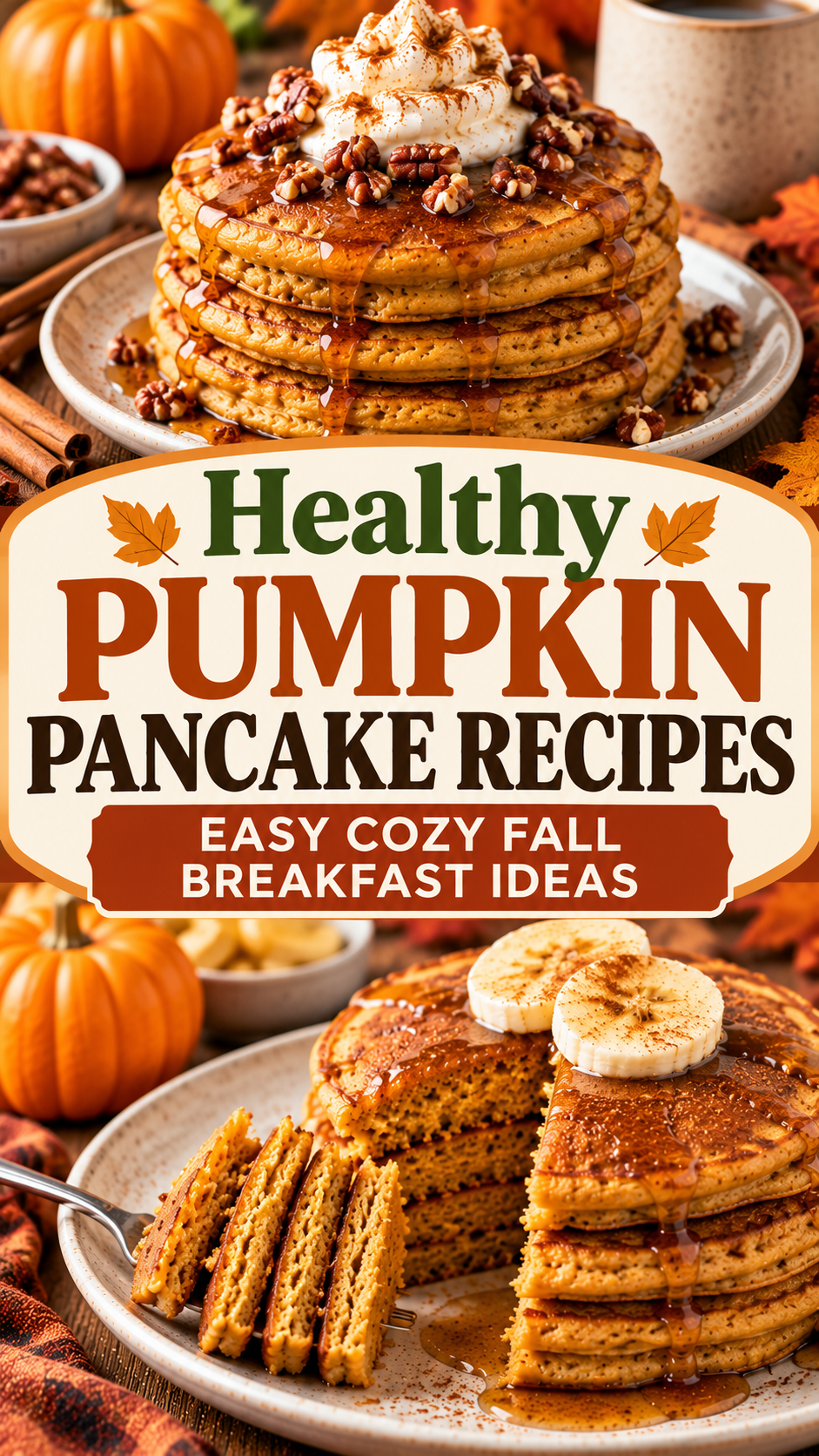
Pumpkin pancakes can absolutely be part of a more balanced fall breakfast without turning into sad little pancakes that taste suspiciously like compromise.
Pumpkin puree adds moisture and flavor, oats and whole grains can make a stack more filling, and fruit can provide sweetness without asking brown sugar to handle the entire breakfast.
The important part is keeping the pancakes fluffy.
These five recipes do exactly that, with options featuring oats, Greek yogurt, banana, apples, and whole wheat flour.
What You’ll Need
Oatmeal Pumpkin Pancakes
- 1 cup old-fashioned rolled oats
- 3/4 cup pumpkin puree
- 2 large eggs
- 3/4 cup milk
- 1 teaspoon baking powder
- 1 teaspoon cinnamon
- 1 teaspoon vanilla
- 1 tablespoon maple syrup
- Pinch of salt
- Oil or butter for the pan
Pumpkin Greek Yogurt Pancakes
- 1 cup all-purpose flour
- 1 teaspoon baking powder
- 1/2 teaspoon baking soda
- 1 teaspoon cinnamon
- 1/4 teaspoon nutmeg
- 1/2 cup pumpkin puree
- 1/2 cup plain Greek yogurt
- 1/2 cup milk
- 1 large egg
- 1 tablespoon maple syrup
- 1 teaspoon vanilla
Banana Pumpkin Pancakes
- 1 ripe banana
- 1/2 cup pumpkin puree
- 2 large eggs
- 3/4 cup oat flour
- 1 teaspoon baking powder
- 1 teaspoon cinnamon
- 1/2 teaspoon vanilla
- Pinch of salt
Whole Wheat Apple Pumpkin Pancakes
- 1 cup whole wheat flour
- 1 teaspoon baking powder
- 1/2 teaspoon baking soda
- 1 teaspoon cinnamon
- 1/2 cup pumpkin puree
- 3/4 cup milk
- 1 large egg
- 1 tablespoon maple syrup
- 1 tablespoon melted butter or oil
- 1 small apple, finely diced
Pumpkin Pecan Pancakes
- 3/4 cup whole wheat flour
- 1/2 cup all-purpose flour
- 2 teaspoons baking powder
- 1 teaspoon cinnamon
- 1/4 teaspoon ground ginger
- 1/2 cup pumpkin puree
- 1 cup milk
- 1 large egg
- 1 tablespoon maple syrup
- 1 tablespoon melted butter
- 1/3 cup chopped pecans
Tools You’ll Need
- Mixing bowls
- Whisk
- Measuring cups and spoons
- Blender for the oatmeal pancakes
- Nonstick skillet or griddle
- Spatula
- 1/4-cup measure
A nonstick skillet makes these recipes much easier because you can cook them with only a small amount of added butter or oil.
Keep the heat moderate.
Pumpkin batter tends to be thicker than ordinary pancake batter, and turning the burner up aggressively mostly creates pancakes that are dark outside and conducting unfinished business in the middle.
Oatmeal Pumpkin Pancakes
This is the recipe to try when you want to skip regular flour entirely.
Add the oats to a blender and process until they resemble coarse flour.
Add pumpkin, eggs, milk, baking powder, cinnamon, vanilla, maple syrup, and salt.
Blend just until combined.
Let the batter sit for 5 minutes. The oats will absorb some of the liquid and the mixture will thicken slightly.
Heat a lightly greased skillet over medium-low heat.
Pour roughly 1/4 cup batter for each pancake.
Cook for about 2 to 3 minutes, until the edges look set and bubbles begin appearing. Flip carefully and cook the second side for another minute or two.
Serve with berries, sliced banana, plain Greek yogurt, chopped nuts, or a small drizzle of maple syrup.
These pancakes are naturally softer than traditional flour pancakes, so give the first side enough time before flipping.
The spatula should be invited underneath.
It should not have to conduct a rescue operation.
Pumpkin Greek Yogurt Pancakes
Greek yogurt gives this batch a soft, tender texture and adds protein without requiring protein powder.
Whisk the flour, baking powder, baking soda, cinnamon, and nutmeg together.
In another bowl, combine pumpkin, Greek yogurt, milk, egg, maple syrup, and vanilla.
Fold the wet mixture into the dry ingredients.
Stop stirring as soon as everything is combined.
Let the batter rest for about 5 minutes.
Cook 1/4-cup portions on a lightly greased skillet over medium-low heat.
Flip once the edges are set and bubbles begin appearing.
If the batter seems unusually thick, add another tablespoon or two of milk.
Different Greek yogurts vary quite a bit in thickness.
Breakfast occasionally requires minor negotiations.
Serve with fruit and another spoonful of yogurt for an easy fall breakfast that still feels like an actual stack of pancakes.
Five Ways to Keep Healthier Pancakes Fluffy
Don’t automatically replace every bit of white flour. Whole grains are useful, but combining flours can sometimes produce a lighter texture.
Measure the pumpkin. Extra puree adds moisture and weight. More pumpkin does not automatically create a better pumpkin pancake.
Let oat batter rest. Oats need a few minutes to absorb moisture.
Avoid overmixing. Stir until combined and stop.
Cook over medium-low heat. Thick batter needs enough time for the center to cook before the surface gets too dark.
And don’t flatten pancakes with your spatula after flipping.
They’re pancakes, not panini.
Banana Pumpkin Pancakes
Ripe banana does two useful things here.
It adds natural sweetness and helps create a soft pancake without needing much added sugar.
Mash the banana thoroughly.
Whisk it with pumpkin and eggs.
Add oat flour, baking powder, cinnamon, vanilla, and salt.
Stir until combined and let the batter rest for about 5 minutes.
Cook small pancakes over medium-low heat.
Keeping these slightly smaller makes them easier to flip because banana and pumpkin both create a moist, tender batter.
Wait until the first side is properly set before turning.
Serve with chopped walnuts, berries, Greek yogurt, or a thin layer of nut or seed butter.
If your banana is extremely ripe, you may find the pancakes sweet enough without syrup.
If not, a little maple syrup is perfectly reasonable.
A balanced breakfast does not require maple syrup to enter witness protection.
Whole Wheat Apple Pumpkin Pancakes
These pancakes bring apples, pumpkin, and cinnamon together without needing a heavily sweetened topping.
First, dice the apple quite finely.
Whisk the whole wheat flour, baking powder, baking soda, and cinnamon.
In another bowl, combine pumpkin, milk, egg, maple syrup, and melted butter or oil.
Fold the wet ingredients into the dry mixture.
Add the diced apple and stir only enough to distribute it.
Cook over medium-low heat until golden and cooked through.
Keep those apple pieces small.
A large chunk of raw apple hidden inside a fully cooked pancake creates an unnecessary texture surprise before coffee.
For softer apples, sauté the diced fruit for 2 or 3 minutes before adding it to the batter.
Top the pancakes with warm cinnamon apples or plain yogurt.
Pumpkin Pecan Pancakes
This version uses a mixture of whole wheat and all-purpose flour rather than making the whole wheat flour responsible for everything.
Toast the pecans briefly in a dry skillet and set aside.
Whisk both flours with baking powder, cinnamon, and ginger.
In another bowl, combine pumpkin, milk, egg, maple syrup, and melted butter.
Gently combine wet and dry ingredients.
Fold in most of the toasted pecans.
Cook 1/4-cup portions over medium-low heat until the centers are cooked and both sides are golden.
Scatter the remaining pecans over the finished stack.
Toasted pecans bring enough flavor that you may find you need less syrup.
Watch them while they’re toasting, though.
Nuts are very calm right up until the moment they aren’t.
Substitutions and Variations
All five recipes can be adjusted without turning breakfast into a science experiment.
Regular dairy milk or an unsweetened plant-based alternative can work depending on the recipe.
Walnuts can replace pecans.
For more fruit, add blueberries to the oatmeal or Greek yogurt pancakes.
You can also add chia seeds or ground flaxseed in modest amounts. Both absorb liquid, so adding a large quantity may require extra milk.
A few mini dark chocolate chips can turn any of these into a slightly sweeter weekend breakfast.
For more fall spice, try ginger, nutmeg, or a very small pinch of cloves.
And always use plain pumpkin puree rather than pumpkin pie filling.
Pumpkin pie filling arrives already sweetened and spiced.
It has dessert plans.
Make-Ahead Breakfast Tips
Pancakes are surprisingly good meal-prep food.
You can combine the dry ingredients the night before and store them covered.
Keep wet ingredients refrigerated separately, then mix everything in the morning.
Cooked pancakes are even easier.
Let them cool promptly, then refrigerate them in a covered container with parchment between layers.
For longer storage, freeze cooled pancakes individually on a baking sheet before transferring them to a freezer-safe container.
Now you can remove exactly what you need.
This is much more convenient than discovering your pancakes have frozen themselves into one large breakfast tile.
Building a More Satisfying Breakfast
Instead of making the pancake itself carry every nutritional responsibility, think about what goes beside it.
Try your stack with:
- Plain Greek yogurt
- Fresh berries
- Sliced apples or pears
- Chopped pecans or walnuts
- Nut or seed butter
- Eggs
- A small amount of maple syrup
Fruit brings sweetness and texture, while yogurt, eggs, nuts, or seed butter can make the meal more substantial.
You don’t need every topping at once.
A pancake buried under yogurt, banana, berries, nuts, nut butter, maple syrup, granola, and seeds may eventually require its own serving bowl.
Leftovers and Storage
Cool cooked pancakes promptly and refrigerate them within 2 hours, or within 1 hour if temperatures are above 90°F.
Keep refrigerated leftovers at 40°F or below and use them within 3 to 4 days.
Reheat leftovers thoroughly to 165°F.
A toaster or toaster oven works particularly well because it warms the pancake while bringing back a little texture around the edges.
The microwave is faster and produces softer pancakes.
Cooked pancakes can also be frozen.
Place parchment between portions so you can separate them easily, and label the container.
“Pumpkin pancakes” is useful.
“Mysterious orange breakfast objects” creates unnecessary work later.
Frequently Asked Questions
Are pumpkin pancakes naturally sweet?
Pumpkin puree itself isn’t particularly sweet. Banana, apples, or a modest amount of maple syrup can add sweetness without requiring much added sugar.
Can I make pumpkin pancakes with oats?
Yes. Rolled oats can be blended into oat flour and used to make soft pumpkin pancakes.
Can I use whole wheat flour?
Yes. Whole wheat flour works well, although combining it with all-purpose flour can create a lighter pancake.
Why are my pumpkin pancakes too dense?
Too much pumpkin, overmixing, or batter that’s too thick can all contribute. Measure carefully and add a little milk if needed.
Can I freeze healthy pumpkin pancakes?
Yes. Cool them completely, separate portions with parchment, and freeze in an airtight freezer-safe container.
What can I put on pumpkin pancakes besides syrup?
Try Greek yogurt, fresh fruit, warm apples, chopped nuts, nut or seed butter, or a light dusting of cinnamon.
Wrapping Up
A healthier pumpkin pancake doesn’t need to taste like the fun part of breakfast was removed.
The Oatmeal Pumpkin Pancakes are an easy flourless option, while Pumpkin Greek Yogurt Pancakes stay soft and fluffy with a little extra protein from the yogurt.
Make Banana Pumpkin Pancakes when you want natural sweetness, try the Whole Wheat Apple Pancakes for plenty of cozy fall flavor, or choose Pumpkin Pecan Pancakes when a little toasted crunch sounds better.
Keep the pumpkin measured, don’t overmix the batter, and give the pancakes enough time to cook over moderate heat.
Then add the toppings you actually enjoy.
Breakfast is allowed to be nutritious and still look forward to maple syrup.