Shrimp may not be the first ingredient that comes to mind when you think about cozy fall dinners.
That should probably change.
It cooks in minutes, works beautifully with garlic, butter, pumpkin, mushrooms, apple cider, Parmesan, and plenty of herbs, and can turn a basic skillet or bowl of pasta into dinner before you’re tempted to order takeout.
The main trick is simple: don’t cook shrimp like it has personally offended you. A few minutes is usually all it needs.
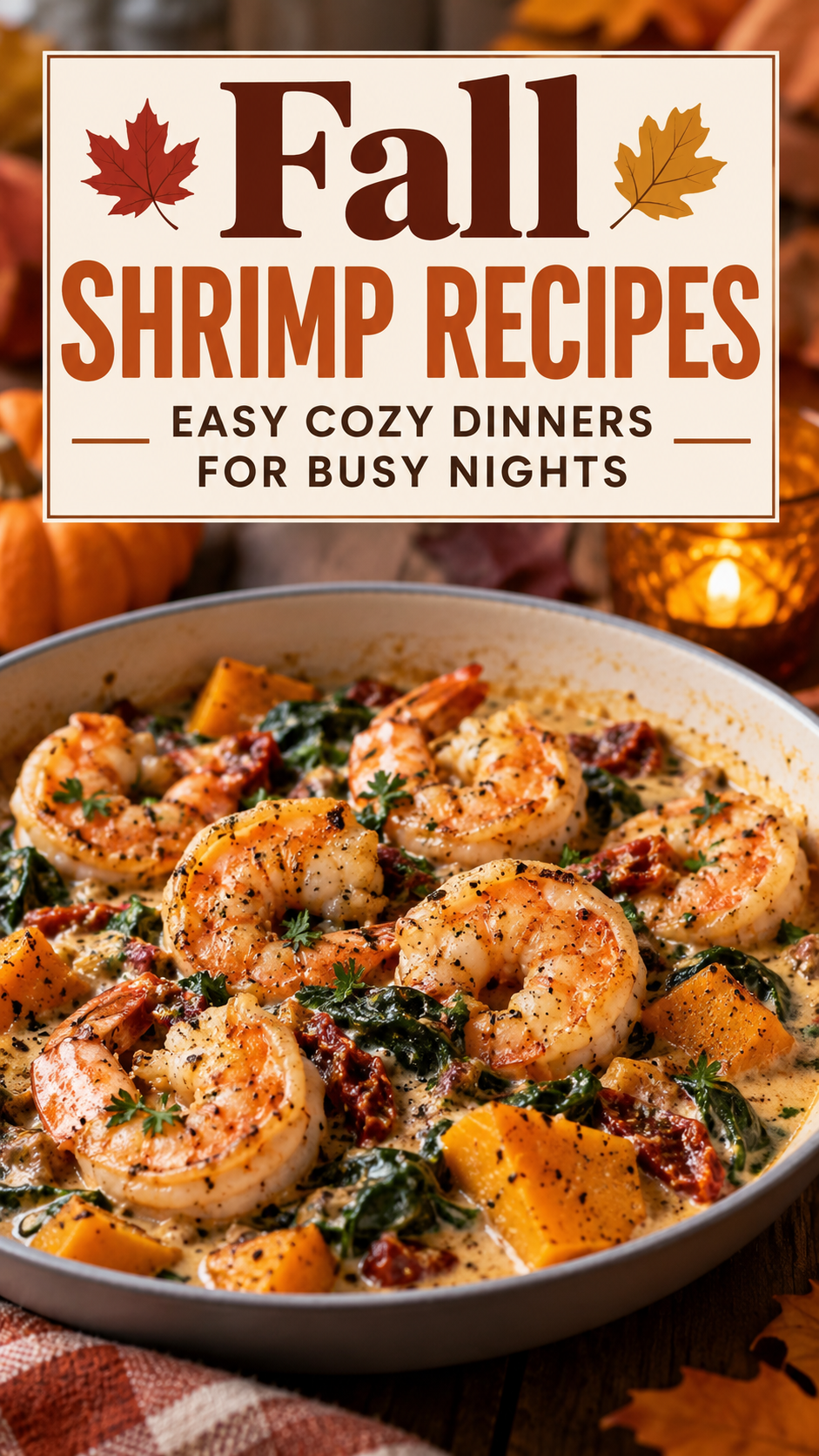
Here are five fall shrimp recipes built for busy nights: creamy garlic mushroom shrimp, pumpkin Parmesan shrimp pasta, apple cider glazed shrimp, shrimp and butternut squash skillet, and cozy shrimp corn chowder.
What You’ll Need
Creamy Garlic Mushroom Shrimp
- 1 pound large shrimp, peeled and deveined
- 8 ounces cremini mushrooms, sliced
- 2 tablespoons butter
- 1 tablespoon olive oil
- 3 garlic cloves, minced
- 3/4 cup chicken or vegetable broth
- 1/2 cup heavy cream
- 1/3 cup grated Parmesan
- 1 teaspoon fresh thyme
- Salt and black pepper
- 2 cups baby spinach
Pumpkin Parmesan Shrimp Pasta
- 1 pound large shrimp, peeled and deveined
- 8 ounces pasta
- 1 tablespoon olive oil
- 2 garlic cloves, minced
- 3/4 cup plain pumpkin puree
- 3/4 cup broth
- 1/3 cup heavy cream
- 1/2 cup grated Parmesan
- 1/2 teaspoon dried sage
- Pinch of nutmeg
- Salt and black pepper
Apple Cider Glazed Shrimp
- 1 pound large shrimp, peeled and deveined
- 1 tablespoon olive oil
- 1 tablespoon butter
- 1/2 cup apple cider
- 1 tablespoon Dijon mustard
- 1 teaspoon maple syrup
- 1 teaspoon apple cider vinegar
- 1/2 teaspoon fresh thyme
- Salt and black pepper
Shrimp and Butternut Squash Skillet
- 1 pound large shrimp, peeled and deveined
- 3 cups butternut squash, cut into small cubes
- 1 small red onion, sliced
- 2 tablespoons olive oil
- 2 garlic cloves, minced
- 1 teaspoon smoked paprika
- 1/2 teaspoon dried thyme
- 2 cups baby spinach
- Salt and black pepper
- 1/3 cup crumbled feta, optional
Cozy Shrimp Corn Chowder
- 1 pound shrimp, peeled and deveined
- 2 tablespoons butter
- 1 small onion, diced
- 2 celery stalks, diced
- 2 garlic cloves, minced
- 2 medium potatoes, diced
- 3 cups broth
- 2 cups corn
- 1 cup milk
- 1/2 cup heavy cream
- 1/2 teaspoon smoked paprika
- 1/2 teaspoon dried thyme
- Salt and black pepper
Tools You’ll Need
A few basic kitchen tools handle everything here:
- Large skillet
- Large pot
- Pasta pot
- Cutting board
- Sharp knife
- Wooden spoon
- Tongs
- Measuring cups and spoons
- Instant-read food thermometer
One useful habit before you begin: pat the shrimp dry.
Wet shrimp tends to steam instead of developing those lightly browned edges we’re after.
Creamy Garlic Mushroom Shrimp
This is the dinner for the night when you want something rich and comforting but don’t particularly want to wait for it.
Mushrooms and thyme give the sauce plenty of fall flavor, while shrimp keeps the cooking time short.
Heat olive oil and 1 tablespoon butter in a large skillet over medium-high heat.
Add the mushrooms in a fairly even layer.
Leave them alone for a couple of minutes before stirring. Cook for about 5 to 7 minutes, until browned.
Constantly moving mushrooms around mostly provides them with an excellent tour of the skillet.
Add garlic and thyme. Cook for about 30 seconds.
Move the mushrooms aside and add the remaining butter and shrimp.
Cook the shrimp briefly on each side, then transfer them to a plate before they’re completely finished.
Pour in the broth and scrape up the browned bits.
Add cream and Parmesan. Simmer gently until slightly thickened.
Stir in spinach.
Return the shrimp and cook just until they’re opaque and reach 145°F.
Serve over pasta, rice, mashed potatoes, or with crusty bread.
Pumpkin Parmesan Shrimp Pasta
Pumpkin doesn’t have to spend the entire season inside pies and muffins.
Its mild sweetness works particularly well with Parmesan, garlic, sage, and a creamy pasta sauce.
Cook the pasta according to package directions. Reserve about 1/2 cup pasta water before draining.
Meanwhile, heat olive oil in a skillet.
Season the shrimp lightly with salt and pepper.
Cook briefly on each side until nearly done, then remove from the skillet.
Lower the heat and add garlic.
Stir in pumpkin puree, broth, cream, sage, and a tiny pinch of nutmeg.
Use plain pumpkin puree, not pumpkin pie filling.
The cans remain confusingly similar despite having completely different dinner plans.
Simmer for 3 to 4 minutes.
Stir in Parmesan.
Add the pasta and enough reserved pasta water to loosen the sauce.
Return the shrimp and cook just until they reach 145°F.
Taste before adding more salt because Parmesan has already contributed quite a bit.
Five Shrimp Rules Worth Remembering
Buy peeled shrimp when speed matters. Weeknight dinner does not need an additional shell-removal department.
Thaw frozen shrimp safely. Thaw overnight in the refrigerator, or use a faster cold-water method rather than leaving seafood on the counter.
Dry before cooking. Removing excess surface moisture helps shrimp brown.
Cook shrimp near the end. Vegetables, potatoes, squash, and sauces usually need more time.
Watch the temperature. For food safety, cook shrimp to 145°F. The flesh should be pearly and opaque.
Shrimp cooks quickly.
An extra ten minutes “just to be safe” usually creates something considerably closer to seafood-flavored rubber.
Apple Cider Glazed Shrimp
This sounds slightly unusual until you taste it.
Apple cider gives the sauce sweetness and acidity, Dijon adds sharpness, and butter brings everything together.
Heat olive oil in a skillet over medium-high heat.
Season the shrimp with salt and pepper.
Cook briefly on both sides, then transfer to a plate.
Add apple cider to the skillet.
Whisk in Dijon, maple syrup, apple cider vinegar, and thyme.
Let the mixture simmer for about 5 to 7 minutes, until reduced enough to lightly coat a spoon.
Reduce the heat and stir in butter.
Return the shrimp and toss them through the glaze just until cooked to 145°F.
Serve with wild rice, roasted Brussels sprouts, or mashed sweet potatoes.
And yes, use apple cider, not apple cider vinegar for the 1/2 cup measurement.
Half a cup of vinegar would give dinner a very different personality.
Shrimp and Butternut Squash Skillet
Shrimp cooks in minutes.
Butternut squash absolutely does not.
The solution is to give the squash a head start instead of putting everything into the skillet simultaneously and hoping dinner works out its differences.
Heat 1 tablespoon olive oil in a large skillet.
Add the squash and onion with a pinch of salt.
Cook for 10 to 15 minutes, stirring occasionally, until the squash is nearly tender. Smaller cubes will cook faster.
Add a splash of water and cover briefly if the squash needs help softening.
Stir in garlic, smoked paprika, and thyme.
Push the vegetables toward the sides.
Add the remaining olive oil and shrimp to the center.
Cook until the shrimp are opaque and reach 145°F.
Fold in the spinach and let it wilt.
Finish with feta if using.
That’s dinner.
A one-skillet meal is allowed to remain one skillet. You don’t need to create three side dishes out of guilt.
Cozy Shrimp Corn Chowder
Corn chowder works especially well during that strange part of fall when summer corn still sounds good but dinner needs to be warmer.
Shrimp turns it into a full meal without requiring a long simmer.
Melt the butter in a large pot.
Add onion and celery. Cook for about 5 minutes until softened.
Add garlic and cook another 30 seconds.
Stir in potatoes, broth, corn, smoked paprika, and thyme.
Bring to a gentle simmer.
Cook for approximately 12 to 15 minutes, or until the potatoes are tender.
For a thicker chowder, mash some of the potatoes and corn directly against the side of the pot.
Add milk and cream.
Keep the heat gentle once the dairy goes in.
Add the shrimp last and cook only until opaque and 145°F.
Taste and adjust the seasoning.
A little black pepper on top is plenty.
The chowder has already handled dinner. It does not need twelve garnishes and a personal stylist.
Easy Substitutions and Variations
These recipes are easy to adjust around what you already have.
Use half-and-half instead of heavy cream when suitable.
Baby kale can replace spinach, though it may need a little longer to soften.
Sweet potato works instead of butternut squash. Cut it into small cubes so it cooks evenly.
For the pasta, try linguine, fettuccine, rigatoni, or another shape that holds creamy sauce well.
Frozen corn is completely fine in the chowder.
You can also add cooked bacon to the chowder or mushroom skillet for extra smoky flavor.
Want heat?
Add red pepper flakes or a small amount of cayenne.
Just don’t put pumpkin, maple syrup, apple cider, sage, smoked paprika, mushrooms, and bacon into every recipe simply because they all sound like fall.
Seasonal enthusiasm still requires supervision.
Make-Ahead Without Overcooking the Shrimp
These aren’t recipes that need to be completely cooked three days ahead.
Shrimp is much better when freshly cooked.
Instead, prepare the slower components early.
Cube the squash, slice mushrooms, chop onions, grate Parmesan, and measure seasonings.
The pumpkin sauce can also be prepared ahead and refrigerated.
For chowder, you can make the soup base without shrimp, refrigerate it promptly, then reheat it and cook the shrimp in the hot chowder shortly before serving.
For the apple cider recipe, mix the cider, mustard, maple syrup, vinegar, and thyme ahead.
Then dinner becomes mostly a matter of cooking shrimp for a few minutes.
That’s the kind of meal prep busy nights actually benefit from.
Leftovers and Storage
Refrigerate cooked shrimp dishes promptly in shallow, covered containers.
Don’t leave perishable food at room temperature longer than 2 hours, or 1 hour when the temperature is above 90°F.
Keep leftovers refrigerated at 40°F or below and use most cooked leftovers within 3 to 4 days.
Shrimp can become tough when repeatedly reheated, so warm leftovers only until necessary. Previously cooked leftovers should reach 165°F when reheated.
Creamy pasta may thicken considerably in the refrigerator. Add a splash of broth or milk when reheating.
Chowder also thickens overnight, which is completely normal.
Freezing creamy shrimp dishes isn’t my first choice because both the dairy sauce and shrimp texture can suffer.
These are better treated as dinner tonight and lunch tomorrow rather than a mysterious freezer container discovered in December.
Frequently Asked Questions
What flavors go well with shrimp in fall?
Garlic, mushrooms, sage, thyme, pumpkin, butternut squash, apple cider, maple, Parmesan, corn, and smoked paprika are all good options.
Can I use frozen shrimp?
Yes. Frozen shrimp is convenient for weeknight cooking. Thaw it safely before cooking unless your specific recipe is designed for frozen shrimp.
What temperature should shrimp reach?
Cook seafood, including shrimp, to an internal temperature of 145°F.
How do I keep shrimp from becoming rubbery?
Avoid overcooking it. Add shrimp toward the end when the other ingredients are already close to done.
Can I use smaller shrimp?
Yes. Smaller shrimp will generally cook faster, so watch them closely.
What’s the fastest recipe here?
The apple cider shrimp and creamy mushroom shrimp are both good choices when dinner needs to happen quickly.
Can I make these dairy-free?
Some can be adapted with suitable dairy-free alternatives. The apple cider shrimp is particularly easy to modify by using a suitable butter alternative.
What should I serve with fall shrimp?
Rice, pasta, roasted vegetables, mashed potatoes, crusty bread, and simple fall salads all work well.
Wrapping Up
Shrimp doesn’t need warm weather to earn a place at dinner.
Pair it with mushrooms and garlic for a creamy skillet, or bring pumpkin into a Parmesan pasta sauce.
Use apple cider and Dijon when you want something sweet and savory.
Add butternut squash for a colorful one-pan meal, or turn shrimp into a warm corn and potato chowder when the evening calls for a bowl and a spoon.
The biggest advantage is still speed.
You get all those cozy fall flavors without waiting hours for dinner to become tender.
If you try one of these fall shrimp recipes, leave a comment and tell me which one you made, or share any questions below.