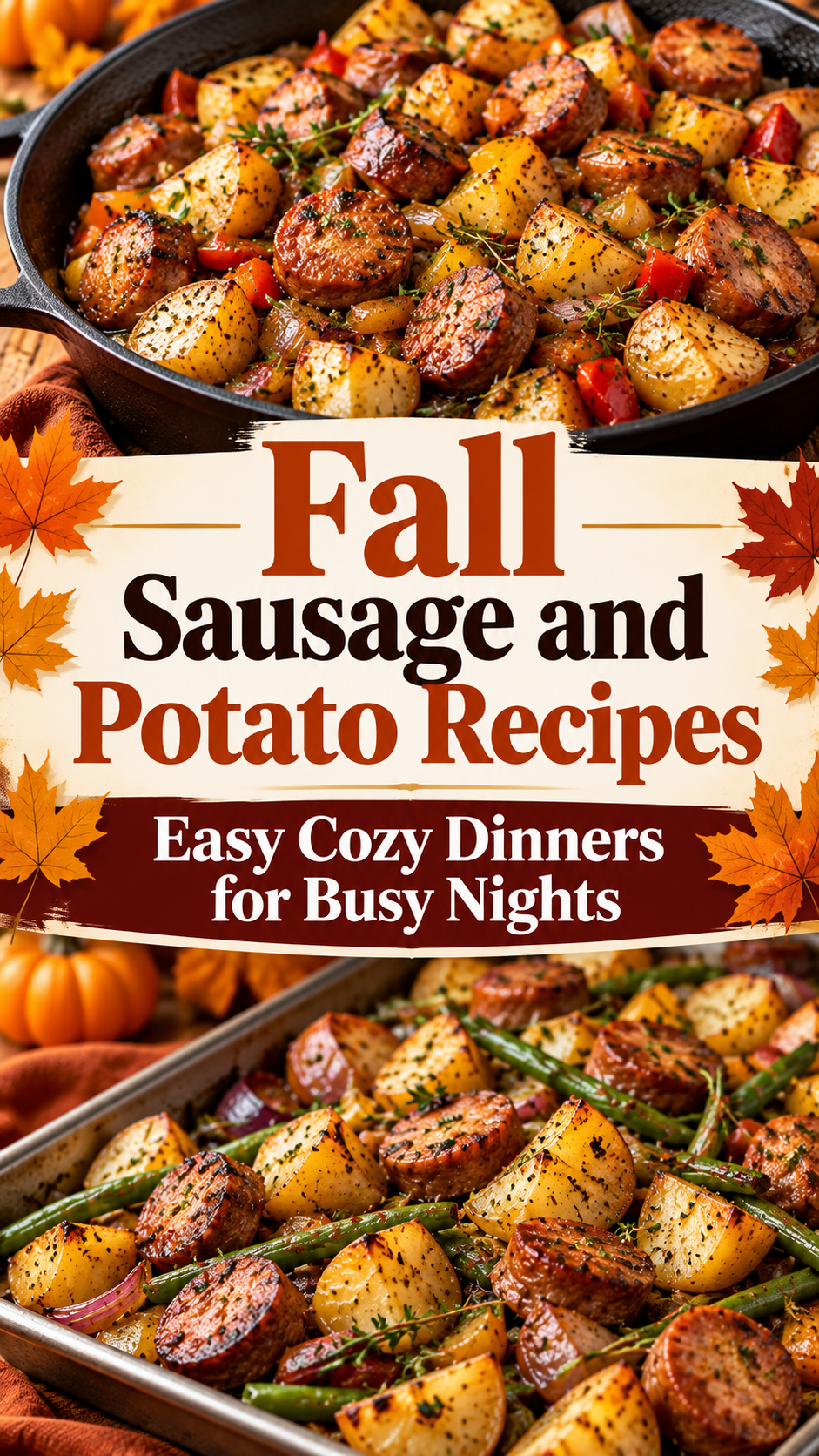
Sausage and potatoes understand the assignment when the weather gets colder.
They are hearty, inexpensive, easy to season, and perfectly comfortable sharing a skillet or sheet pan with apples, onions, peppers, mushrooms, garlic, cabbage, and plenty of fall herbs. More importantly, you can turn them into a proper dinner without spending the evening supervising six different pans.
These five recipes range from crispy sheet-pan potatoes to a creamy skillet dinner, with plenty of cozy fall flavor and very little unnecessary fuss.
What You’ll Need
Apple Sausage and Potato Sheet Pan Dinner
- 1 pound smoked sausage, sliced
- 1 1/2 pounds baby potatoes, halved
- 2 crisp apples, cut into wedges
- 1 red onion, cut into wedges
- 2 tablespoons olive oil
- 1 tablespoon Dijon mustard
- 1 teaspoon fresh thyme
- 1/2 teaspoon garlic powder
- Salt and black pepper
Creamy Garlic Sausage and Potato Skillet
- 1 pound Italian sausage
- 1 1/2 pounds baby potatoes, quartered
- 8 ounces mushrooms, sliced
- 3 garlic cloves, minced
- 1 cup chicken broth
- 1/2 cup heavy cream
- 1 teaspoon Dijon mustard
- 1/2 teaspoon dried thyme
- 1/3 cup grated Parmesan
- Salt and black pepper
Maple Dijon Sausage with Sweet Potatoes
- 1 pound fully cooked chicken or pork sausage, sliced
- 2 large sweet potatoes, cut into 1-inch cubes
- 1 small red onion, sliced
- 2 tablespoons olive oil
- 1 tablespoon pure maple syrup
- 1 tablespoon Dijon mustard
- 1 teaspoon smoked paprika
- 1/2 teaspoon rosemary
- Salt and black pepper
Sausage, Potato and Cabbage Skillet
- 1 pound smoked sausage, sliced
- 1 pound Yukon Gold potatoes, cubed
- 4 cups chopped green cabbage
- 1 small onion, sliced
- 2 tablespoons olive oil
- 2 garlic cloves, minced
- 1 teaspoon Dijon mustard
- 1/2 teaspoon smoked paprika
- Salt and black pepper
Rosemary Sausage and Potato Bake
- 1 pound Italian sausage links
- 1 1/2 pounds baby potatoes, halved
- 2 carrots, cut into chunks
- 1 yellow onion, cut into wedges
- 2 tablespoons olive oil
- 3 garlic cloves, minced
- 1 teaspoon chopped rosemary
- 1 teaspoon thyme
- 1/2 teaspoon paprika
- Salt and black pepper
Tools You’ll Need
- Large sheet pan
- Large skillet with lid
- Sharp knife
- Cutting board
- Mixing bowl
- Wooden spoon
- Tongs
- Instant-read thermometer
Sausage varies, so check the package before cooking.
Some sausages are sold fully cooked and only need thorough reheating. Fresh raw sausage needs to be completely cooked. Ground pork or beef sausage should reach 160°F, while chicken or turkey sausage should reach 165°F.
Knowing which one you bought saves quite a bit of unnecessary sausage detective work later.
Apple Sausage and Potato Sheet Pan Dinner
Apples and sausage are already good friends. Adding crispy potatoes means dinner can stay on one pan.
Heat the oven to 425°F.
Toss the potatoes and onion with olive oil, Dijon, thyme, garlic powder, salt, and pepper.
Spread them across a large sheet pan and roast for 20 minutes.
Add the sliced sausage and apple wedges. Toss gently and return everything to the oven for another 15 to 20 minutes, until the potatoes are tender and browned.
If you’re using raw sausage rather than fully cooked smoked sausage, don’t simply follow these times. Cook it according to its type and verify the appropriate safe internal temperature.
Choose a firm apple such as Honeycrisp, Pink Lady, or Granny Smith.
Very soft apples can collapse during roasting.
Still edible, certainly.
Just less “roasted apple wedge” and more “apple has left the meeting.”
Creamy Garlic Sausage and Potato Skillet
This recipe is for the night when crispy potatoes sound good, but creamy garlic sauce sounds considerably better.
If using raw Italian sausage, remove it from the casings or break it into chunks.
Brown the sausage in a large skillet until fully cooked, reaching 160°F for pork sausage or 165°F if using poultry sausage.
Transfer it to a clean plate.
Add the potatoes to the skillet with a splash of oil if needed.
Cook for about 5 minutes, stirring occasionally.
Add the mushrooms and let them brown.
Stir in garlic, then pour in the chicken broth.
Cover and gently simmer for 10 to 15 minutes, until the potatoes are tender.
Reduce the heat.
Stir in cream, Dijon, thyme, and Parmesan. Return the cooked sausage and simmer briefly until the sauce thickens.
Taste before adding extra salt since sausage, broth, and Parmesan are already bringing plenty.
Serve it straight from the skillet.
Nobody needs another serving bowl involved in this situation.
Getting Crispy Potatoes Without Burning Dinner
Cut them evenly. Random potato sizes create random cooking times.
Give potatoes a head start. Fully cooked sausage generally needs less oven time than raw potatoes.
Use enough pan space. Crowded potatoes steam instead of developing those browned edges.
Keep apples and delicate vegetables for later. They usually don’t need the full potato cooking time.
Check sausage separately. Never assume browned sausage is safely cooked inside.
Baby potatoes and Yukon Golds are particularly useful because their thin skins mean peeling is optional.
That is not laziness.
That is one less job between you and dinner.
Maple Dijon Sausage with Sweet Potatoes
This one leans into fall flavors without becoming overly sweet.
Heat the oven to 425°F.
Combine olive oil, maple syrup, Dijon, smoked paprika, rosemary, salt, and pepper.
Toss the sweet potatoes and onion with most of the mixture.
Roast for about 20 minutes.
Add sliced fully cooked sausage and the remaining maple-Dijon mixture.
Roast for another 15 to 20 minutes, stirring once, until the sweet potatoes are tender and the sausage is hot and lightly browned.
You can add Brussels sprouts with the sausage if you want another vegetable.
Keep the maple syrup measured rather than pouring directly from the bottle.
This is sausage and potatoes.
They should taste like fall dinner, not discover they’ve been accidentally glazed for dessert.
Sausage, Potato and Cabbage Skillet
Cabbage doesn’t receive much fall dinner publicity, which is unfortunate because it is inexpensive, filling, and particularly good once it picks up the browned bits left behind by sausage.
Heat 1 tablespoon olive oil in a large skillet.
Brown the sausage, cooking it completely if you started with raw sausage. Transfer to a clean plate.
Add the remaining oil and potatoes.
Cook over medium heat for about 8 minutes, stirring occasionally.
Add the onion, cover, and cook until the potatoes are nearly tender.
Stir in cabbage, garlic, Dijon, smoked paprika, salt, and pepper.
Cook uncovered for another 5 to 8 minutes until the cabbage softens but still has some texture.
Return the cooked sausage and heat everything through.
A small splash of broth can loosen any particularly stubborn browned bits from the skillet.
Don’t drown the cabbage.
It came here to become savory and slightly caramelized, not take a bath.
Rosemary Sausage and Potato Bake
This is the most traditional meat-and-potatoes dinner of the five, with carrots and herbs doing enough work to make the whole pan feel properly autumnal.
Heat the oven to 425°F.
Toss potatoes, carrots, onion, garlic, olive oil, rosemary, thyme, paprika, salt, and pepper.
Spread everything across a large baking dish or sheet pan.
If you’re using raw sausage links, arrange them among the vegetables.
Bake for approximately 35 to 45 minutes, turning the sausage and vegetables during cooking.
Check the sausage with a thermometer. Pork sausage should reach 160°F; poultry sausage should reach 165°F.
If the vegetables need longer after the sausage is safely cooked, transfer the sausage to a clean plate and let the vegetables continue roasting.
A spoonful of whole-grain mustard on the side works especially well here.
Substitutions and Fall Variations
These dinners can change considerably depending on the sausage you choose.
Try mild Italian sausage for the creamy skillet, smoked sausage for sheet-pan dinners, or chicken sausage for a different flavor.
Sweet potatoes and regular potatoes can often trade places, though their cooking times may differ slightly.
Brussels sprouts, carrots, butternut squash, mushrooms, bell peppers, and cabbage all fit naturally into these meals.
Pears can replace apples in the sheet-pan recipe.
For extra heat, add red pepper flakes or use spicy Italian sausage.
If you want more herbs, thyme and rosemary are reliable choices. Sage also works particularly well with sausage, apples, and squash.
Choose one direction rather than adding every fall ingredient you own.
The sausage does not need to carry the entire season on its back.
Make-Ahead Tips for Busy Nights
Most of the vegetables can be prepared earlier.
Slice onions, chop carrots, halve baby potatoes, and cut cabbage ahead, then refrigerate them properly in covered containers.
You can also mix maple-Dijon or herb seasonings in advance.
Raw sausage should remain refrigerated at 40°F or below and separated from ready-to-eat ingredients.
For meal prep, fully cook the entire dish rather than partially cooking raw sausage and planning to finish it later.
The creamy sausage skillet can be made ahead, although its sauce may thicken in the refrigerator. Add a small splash of broth or milk while reheating if needed.
Sheet-pan meals are at their crispiest straight from the oven, so prep the ingredients ahead and roast them when you’re ready to eat.
Leftovers and Storage
Refrigerate cooked sausage, potatoes, and other perishable ingredients within 2 hours, or within 1 hour if temperatures are above 90°F.
Keep leftovers at 40°F or below and use them within 3 to 4 days.
Reheat leftovers thoroughly to 165°F.
For roasted sausage and potatoes, the oven or air fryer can restore more of their original texture than the microwave.
The creamy skillet is better reheated gently on the stovetop or in short microwave intervals.
A splash of broth can loosen sauce that has become thick overnight.
Leftover sausage and potatoes can also become breakfast the following morning with a cooked egg on top.
Sometimes dinner’s second career requires very little retraining.
Frequently Asked Questions
What potatoes are best with sausage?
Baby potatoes and Yukon Golds are excellent for roasting and skillets. Russets can work too, especially when you want crispier edges, but they may break apart more easily.
Should I boil potatoes before cooking them with sausage?
Not necessarily. Cutting them into smaller, even pieces and giving them a head start in the oven or skillet usually works well.
Can I use chicken sausage?
Yes. Chicken sausage works nicely with apples, sweet potatoes, maple, Dijon, and herbs. Raw poultry sausage must reach 165°F.
Can I use raw sausage in a sheet-pan dinner?
Yes, but you need to adjust the method and cooking time accordingly. Verify that pork or beef sausage reaches 160°F and poultry sausage reaches 165°F.
What vegetables go well with sausage and potatoes?
Onions, cabbage, mushrooms, carrots, Brussels sprouts, bell peppers, butternut squash, and broccoli are all good choices.
How do I stop sheet-pan potatoes from getting soggy?
Dry them well, leave enough space between the pieces, use a hot oven, and avoid overcrowding the pan. Too much moisture and too little space encourage steaming.
Wrapping Up
Sausage and potatoes don’t need much convincing to become a cozy fall dinner.
Make the Apple Sausage and Potato Sheet Pan Dinner when you want something savory with a little sweetness, or try the Creamy Garlic Sausage Skillet when the evening clearly calls for sauce.
The Maple Dijon Sweet Potato version brings classic fall flavors, Sausage with Potato and Cabbage keeps dinner simple and hearty, and the Rosemary Sausage and Potato Bake gives you an easy oven meal with almost no last-minute work.
Prep the vegetables when you have time, choose the right cooking method for your sausage, and let one pan handle most of dinner.
If you try one of these fall sausage and potato recipes, leave a comment and tell me which one you made, or share any questions below.