The oven starts earning its keep again once fall arrives.
A baked chicken dinner can go into the oven with apples, squash, mushrooms, potatoes, maple, Dijon, or plenty of herbs and come back looking like you put considerably more effort into dinner than you actually did.
That is exactly the arrangement busy autumn nights need.
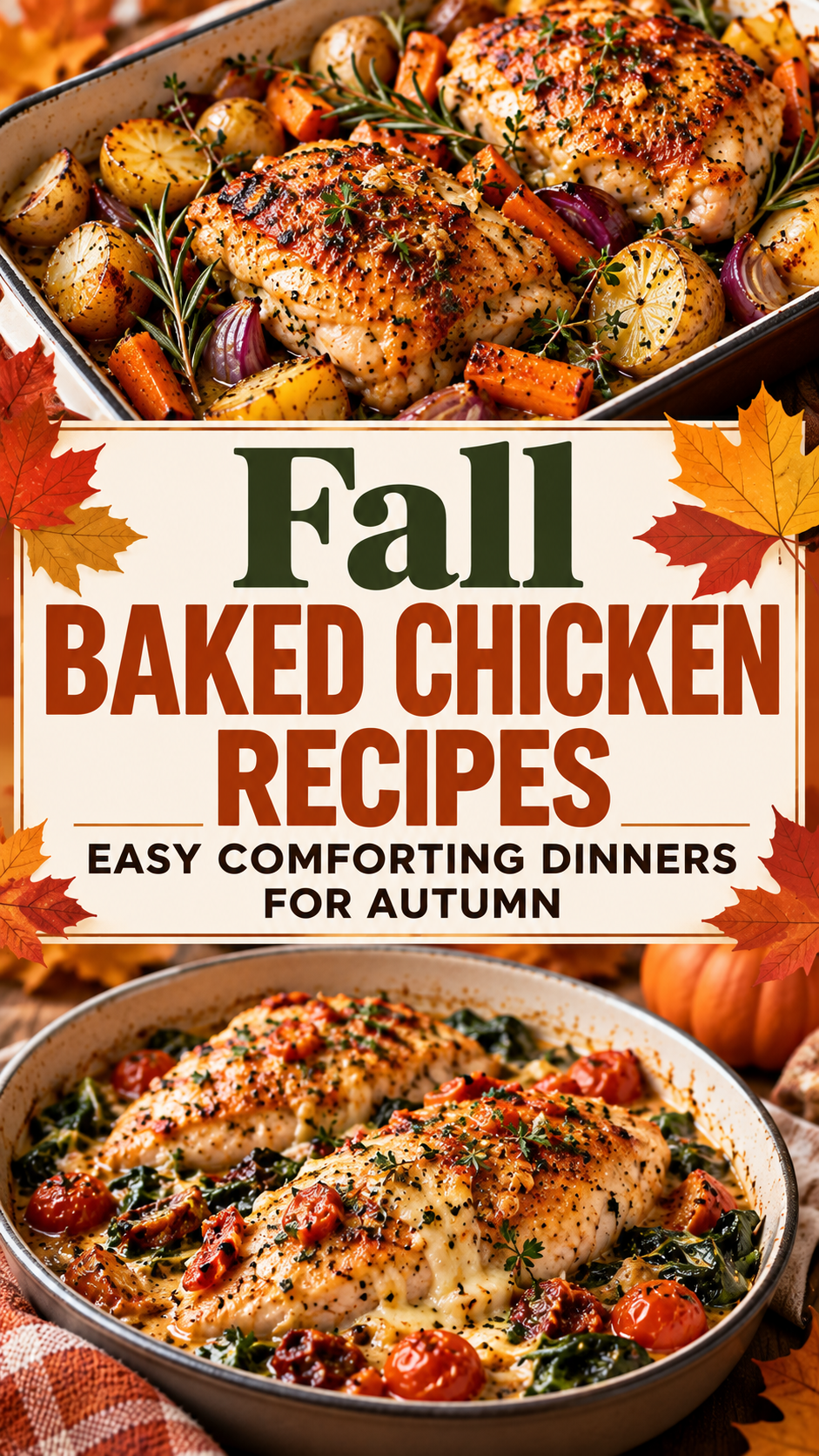
These five recipes cover different moods: maple Dijon chicken thighs, apple sage chicken, creamy mushroom baked chicken, cranberry balsamic chicken, and sheet-pan chicken with butternut squash.
What You’ll Need
Maple Dijon Baked Chicken Thighs
- 1 1/2 pounds boneless, skinless chicken thighs
- 2 tablespoons Dijon mustard
- 2 tablespoons pure maple syrup
- 1 tablespoon olive oil
- 1 tablespoon apple cider vinegar
- 2 garlic cloves, minced
- 1 teaspoon fresh thyme
- Salt and black pepper
Apple Sage Baked Chicken
- 4 boneless, skinless chicken breasts
- 2 apples, sliced
- 1 small yellow onion, sliced
- 1 tablespoon olive oil
- 1 tablespoon butter
- 1/2 cup chicken broth
- 1 teaspoon dried sage
- 1/2 teaspoon dried thyme
- Salt and black pepper
Creamy Mushroom Baked Chicken
- 4 boneless, skinless chicken breasts
- 10 ounces cremini mushrooms, sliced
- 1 tablespoon olive oil
- 2 garlic cloves, minced
- 3/4 cup chicken broth
- 1/2 cup heavy cream
- 1/3 cup grated Parmesan
- 1 teaspoon fresh thyme
- 2 cups baby spinach
- Salt and black pepper
Cranberry Balsamic Baked Chicken
- 1 1/2 pounds boneless, skinless chicken thighs
- 1 1/2 cups fresh or frozen cranberries
- 2 tablespoons balsamic vinegar
- 2 tablespoons maple syrup
- 1 tablespoon olive oil
- 1/2 cup chicken broth
- 1 teaspoon fresh rosemary
- 2 garlic cloves, minced
- Salt and black pepper
Sheet-Pan Chicken and Butternut Squash
- 1 1/2 pounds boneless, skinless chicken thighs
- 3 cups butternut squash, cut into 1-inch cubes
- 1 red onion, cut into wedges
- 2 tablespoons olive oil
- 1 teaspoon smoked paprika
- 1 teaspoon dried thyme
- 1/2 teaspoon garlic powder
- Salt and black pepper
- 1/3 cup dried cranberries, optional
- Chopped pecans, optional
Tools You’ll Need
You’ll only need a few basics:
- Large baking dish
- Sheet pan
- Parchment paper
- Mixing bowls
- Whisk
- Sharp knife
- Cutting board
- Instant-read thermometer
That last one matters.
Chicken is much easier to cook well when you can check its temperature instead of repeatedly cutting into it and hoping dinner provides a useful answer.
Maple Dijon Baked Chicken Thighs
Start with the easiest recipe in the group.
Maple brings sweetness, Dijon keeps it sharp, and apple cider vinegar prevents the glaze from becoming too sugary.
Heat the oven to 400°F.
Whisk together Dijon, maple syrup, olive oil, vinegar, garlic, thyme, salt, and pepper.
Place the chicken thighs in a lightly greased baking dish and coat them with the mixture.
Bake for roughly 20 to 25 minutes, depending on thickness, until the chicken reaches 165°F internally.
Spoon some of the pan juices over the chicken before serving.
This goes particularly well with mashed sweet potatoes or roasted Brussels sprouts.
If you want more color on top, briefly broil the chicken at the end while watching it closely.
Maple syrup can move from caramelized to charcoal with impressive confidence.
Apple Sage Baked Chicken
Apples don’t have to spend all of fall waiting for dessert.
Their sweetness works especially well with chicken, onion, sage, and thyme.
Heat the oven to 400°F.
Season the chicken with salt, pepper, sage, and thyme.
Heat olive oil and butter in an oven-safe skillet or prepare everything directly in a baking dish.
Arrange sliced apples and onions around the chicken.
Pour the broth around, rather than directly over, the chicken.
Bake until the thickest part of each breast reaches 165°F, usually around 20 to 30 minutes, depending on thickness.
If your chicken breasts vary dramatically in size, pound the thicker portions to a more even thickness before cooking.
Let the chicken rest for a few minutes before slicing.
Spoon the softened apples, onions, and pan juices over the top.
It tastes like fall without requiring the chicken to be coated in cinnamon and brown sugar.
The apples have the seasonal department covered.
Five Things That Make Baked Chicken Better
Use pieces of similar size. One enormous chicken breast and one tiny one are unlikely to finish cooking together.
Don’t rely only on time. Thickness matters. Check for 165°F with a food thermometer.
Give vegetables a head start when needed. Dense squash and potatoes often take longer than chicken.
Season more than the surface. Sauces, herbs, vegetables, and pan juices all contribute to the finished dish.
Let chicken rest briefly. Give it about 5 minutes before slicing.
And don’t add another ten minutes “just to make sure” after the thermometer already says 165°F.
The thermometer has answered the question.
Chicken does not need to submit additional documentation.
Creamy Mushroom Baked Chicken
This recipe sits somewhere between a baked dinner and a skillet dinner.
You start the sauce on the stove, then let the oven finish everything together.
Heat the oven to 400°F.
Season the chicken.
Heat olive oil in an oven-safe skillet and brown the chicken for about 2 minutes per side. Transfer it temporarily to a plate.
Add the mushrooms.
Cook for 5 to 7 minutes, allowing them to brown before stirring too frequently.
Add garlic and thyme.
Pour in the broth, scraping up any browned bits.
Stir in cream and Parmesan.
Return the chicken to the skillet and transfer it to the oven.
Bake until the chicken reaches 165°F, roughly 15 to 20 minutes depending on thickness.
Stir spinach into the hot sauce near the end so it wilts.
Serve with mashed potatoes, pasta, or crusty bread.
Leaving that mushroom sauce behind would be poor kitchen management.
Cranberry Balsamic Baked Chicken
Fresh cranberries don’t have to wait until Thanksgiving.
Their tartness is excellent with savory chicken, especially when balanced with maple syrup and balsamic vinegar.
Heat the oven to 400°F.
Place the chicken thighs in a baking dish and season with salt and pepper.
Scatter cranberries around them.
Whisk together balsamic vinegar, maple syrup, olive oil, broth, rosemary, and garlic.
Pour the mixture around the chicken.
Bake for approximately 25 to 30 minutes, or until the chicken reaches 165°F.
The cranberries will soften and burst as they cook.
Spoon the resulting sauce over the chicken.
Taste before adding anything sweeter. Cranberries are supposed to bring some tartness.
We’re making dinner, not quietly converting chicken into pie filling.
Serve with wild rice, roasted carrots, or mashed potatoes.
Sheet-Pan Chicken and Butternut Squash
This is the recipe for the night when one pan sounds like the correct number of pans.
The only issue is timing.
Butternut squash usually needs longer than boneless chicken, so it gets the oven first.
Heat the oven to 425°F.
Toss the squash and red onion with 1 tablespoon olive oil, smoked paprika, thyme, garlic powder, salt, and pepper.
Spread everything across a large sheet pan.
Roast for 15 minutes.
Meanwhile, season the chicken thighs with the remaining olive oil, salt, and pepper.
Remove the pan, stir the vegetables, and add the chicken.
Return it to the oven for another 20 to 25 minutes, or until the squash is tender and the chicken reaches 165°F.
Scatter dried cranberries and pecans over the finished dish if using.
If the squash needs another few minutes, remove the cooked chicken and let the vegetables continue roasting.
Dinner is allowed to have individual cooking times.
This is a sheet pan, not synchronized swimming.
Substitutions and Fall Variations
These recipes can easily follow what’s already in your refrigerator.
Sweet potatoes can replace butternut squash. Keep the cubes fairly small.
Pears work instead of apples in the sage chicken.
Baby kale can replace spinach in the creamy mushroom recipe, though it may need slightly more time to soften.
Boneless thighs and breasts can sometimes be swapped, but their cooking times differ. Cook according to internal temperature rather than simply copying the original time.
Walnuts work instead of pecans.
No fresh cranberries? Frozen cranberries can work without thawing first, though they may release a little more liquid.
Rosemary, thyme, and sage can also be adjusted based on what you have.
You do not need to put maple syrup into every fall chicken recipe.
Maple is good.
It does not need to become autumn’s regional manager.
Prep Now, Bake Later
Baked dinners become much more useful when the chopping happens before everyone is hungry.
Cut the butternut squash and onion ahead and refrigerate them.
Slice the mushrooms.
Mix the maple Dijon glaze.
Prepare the cranberry balsamic mixture and keep it covered in the refrigerator.
Apples are better sliced closer to cooking so they don’t brown excessively.
You can also season the chicken earlier and keep it properly refrigerated.
Avoid partially cooking chicken with plans to finish it much later. If you’re preparing ahead, keep the chicken raw and refrigerated until you’re ready to cook it fully.
The goal is to remove the annoying little jobs from dinner time.
Garlic can already be chopped.
The measuring spoons can have the evening off.
Leftovers and Storage
Refrigerate cooked chicken promptly in shallow, covered containers at 40°F or below.
Perishable food shouldn’t remain at room temperature longer than 2 hours, or 1 hour when temperatures are above 90°F.
Use most cooked leftovers within 3 to 4 days.
Reheat leftovers thoroughly to 165°F.
Creamy mushroom chicken may thicken considerably overnight. Add a small splash of broth when reheating if needed.
The maple Dijon and cranberry chicken are also good sliced over grain bowls or salads the following day.
Freeze cooked chicken in meal-sized portions if you won’t use it within a few days.
Label the container.
Three months from now, “probably chicken” is not enough information for an informed lunch decision.
Frequently Asked Questions
What are good fall flavors for baked chicken?
Apples, cranberries, maple, Dijon, butternut squash, mushrooms, sage, rosemary, thyme, sweet potatoes, and Brussels sprouts all work well.
What temperature should baked chicken reach?
Cook chicken to a safe internal temperature of 165°F, measured in the thickest portion.
Should I cover chicken while baking?
These recipes generally don’t require covering. Leaving the chicken uncovered helps with browning.
How do I keep baked chicken from drying out?
Use similarly sized pieces, avoid unnecessary extra cooking, and check the internal temperature with a thermometer.
Can I use chicken thighs instead of breasts?
Often, yes. Cooking times can change, so use internal temperature to determine doneness.
Which recipe is easiest for a busy night?
The maple Dijon chicken requires very little preparation. The sheet-pan chicken is also convenient when you want the main dish and vegetables cooked together.
Can I prepare baked chicken ahead?
You can prepare vegetables, sauces, and seasonings ahead. Keep raw chicken properly refrigerated and cook it fully when you’re ready for dinner.
What should I serve with fall baked chicken?
Mashed potatoes, wild rice, roasted vegetables, green beans, simple salads, or crusty bread all fit nicely.
Wrapping Up
Fall baked chicken doesn’t need to mean making the same herb-roasted chicken every week.
Go sweet and savory with maple Dijon chicken, or pair chicken with apples and sage for a dinner that feels immediately autumnal.
Make creamy mushroom chicken when the evening calls for comfort food, use fresh cranberries for something tart and savory, or put chicken and butternut squash on one sheet pan and let the oven handle most of dinner.
They’re warm, practical meals built for the nights when the weather is getting colder but the schedule has made absolutely no seasonal adjustments.
If you try one of these fall baked chicken recipes, leave a comment and tell me which one you made, or share any questions below.