A good skillet dinner should solve problems, not create new ones.
It should get dinner on the table quickly, use ingredients you can actually find, and leave you with one main pan instead of a kitchen that looks like you’ve catered a small wedding.
Fall happens to be perfect for this kind of cooking.
Sweet potatoes can roast right beside chicken. Apples work surprisingly well with pork. Ground beef can become a cheesy pumpkin skillet. Sausage makes cabbage considerably more interesting. And mushrooms can turn a simple chicken dinner into something that feels worthy of a chilly evening.
Here are five easy fall skillet dinners for the nights when you want comfort food without turning dinner into a project.
What You’ll Need
1. Creamy Mushroom Chicken Skillet
- 1 1/2 pounds boneless skinless chicken thighs
- 8 ounces cremini mushrooms, sliced
- 1 small onion, diced
- 2 garlic cloves, minced
- 1 tablespoon olive oil
- 1 tablespoon butter
- 1 cup chicken broth
- 1/2 cup heavy cream
- 1 teaspoon Dijon mustard
- 1 teaspoon dried thyme
- 1/2 teaspoon dried rosemary
- Salt and black pepper
- 2 cups baby spinach
2. Apple Cider Pork Chop Skillet
- 4 boneless pork chops, about 1 inch thick
- 2 medium apples, sliced
- 1 small onion, sliced
- 1 tablespoon olive oil
- 1 tablespoon butter
- 1 cup apple cider
- 1/2 cup chicken broth
- 1 tablespoon Dijon mustard
- 1 teaspoon dried sage
- 1/2 teaspoon dried thyme
- Salt and black pepper
3. Ground Beef Pumpkin Rice Skillet
- 1 pound ground beef
- 1 cup long-grain white rice
- 1 small onion, diced
- 2 garlic cloves, minced
- 1 cup plain pumpkin puree
- 2 cups beef broth
- 1 teaspoon smoked paprika
- 1/2 teaspoon dried thyme
- Salt and black pepper
- 1 cup shredded cheddar
- 2 cups baby spinach
4. Sausage Sweet Potato and Cabbage Skillet
- 1 pound ground pork sausage
- 2 medium sweet potatoes, peeled and diced small
- 1 small onion, diced
- 4 cups thinly sliced green cabbage
- 1 tablespoon olive oil
- 2 garlic cloves, minced
- 1 teaspoon smoked paprika
- 1/2 teaspoon dried sage
- 1/2 teaspoon dried thyme
- 1/3 cup chicken broth
- Salt and black pepper
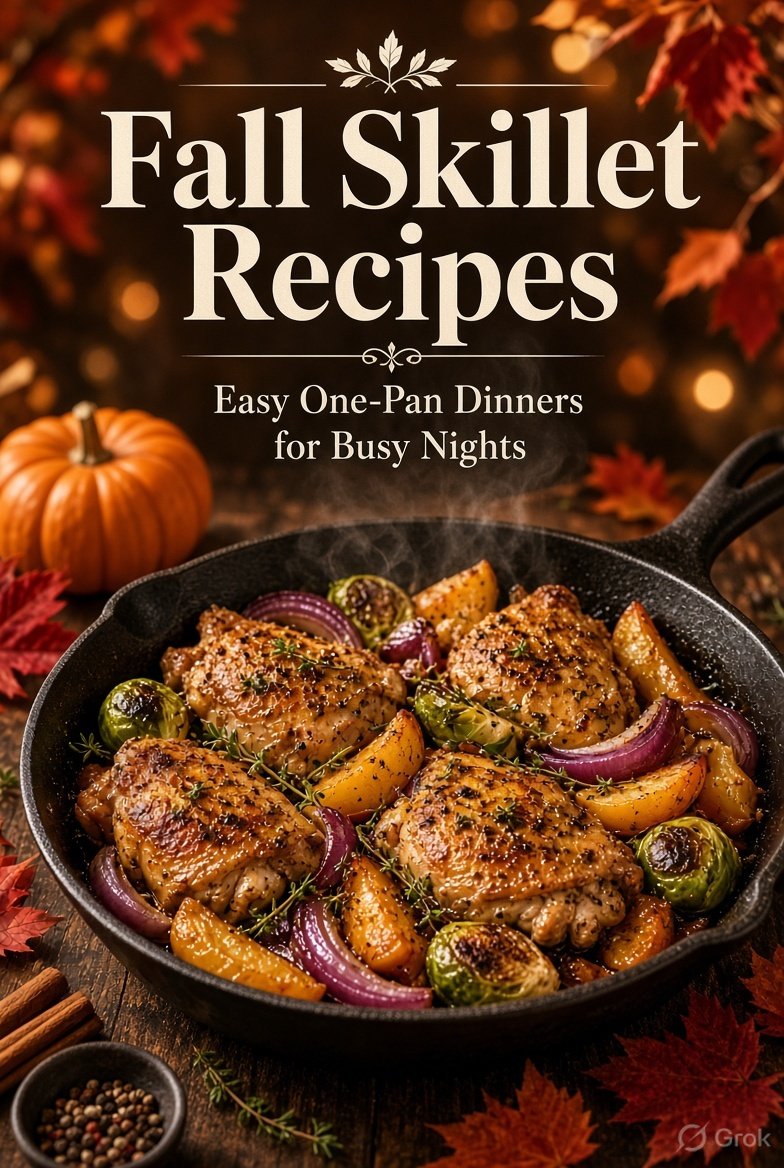
5. Maple Dijon Chicken and Brussels Sprouts
- 1 1/2 pounds boneless skinless chicken thighs
- 1 pound Brussels sprouts, halved
- 1 small red onion, sliced
- 1 tablespoon olive oil
- 2 tablespoons Dijon mustard
- 1 1/2 tablespoons pure maple syrup
- 1 tablespoon apple cider vinegar
- 2 garlic cloves, minced
- 1/2 teaspoon dried thyme
- Salt and black pepper
Tools You’ll Need
The equipment list is pleasantly short:
- Large heavy skillet with a lid
- Cutting board
- Sharp knife
- Wooden spoon or spatula
- Measuring cups and spoons
- Small mixing bowl
- Food thermometer
A 12-inch skillet is particularly useful here.
Use something much smaller and your ingredients may become close enough to start discussing personal boundaries.
Creamy Mushroom Chicken Skillet
This is the dinner for the evening when you want something creamy without making an actual casserole.
The mushrooms get browned first, the chicken cooks in the same pan, and the final sauce picks up everything left behind.
Brown the Chicken
Season the chicken with salt, pepper, thyme, and rosemary.
Heat olive oil in a large skillet over medium-high heat.
Add the chicken and cook for about 5 to 7 minutes per side, depending on thickness, until browned and the center reaches 165°F.
Move it to a plate.
Give the Mushrooms Some Space
Add butter and mushrooms.
Cook for 5 to 7 minutes.
Don’t immediately start stirring them every four seconds. Give them a chance to develop some color.
Add onion and cook for another 3 minutes.
Stir in garlic.
Pour in the broth and scrape up the browned bits from the skillet.
Add cream and Dijon.
Simmer gently for a few minutes.
Return the chicken to the sauce and add spinach.
Once the spinach wilts, dinner is ready.
Mashed potatoes are excellent underneath this sauce, but egg noodles or rice work just as well.
Apple Cider Pork Chop Skillet
Pork chops and apples are one of those combinations that keep returning every fall because they have no particular reason to stop.
Here, apple cider becomes a quick pan sauce with Dijon and sage.
Start With the Pork
Pat the chops dry and season with salt, pepper, sage, and thyme.
Heat olive oil over medium-high heat.
Sear the chops until nicely browned on both sides.
Continue cooking until the thickest part reaches 145°F, then let the pork rest for at least 3 minutes.
Remove it to a plate.
Use the thermometer.
An extra ten minutes “just to make sure” is how pork chops begin requiring emergency gravy.
Cook the Apples
Reduce the heat slightly.
Add butter, apples, and onion.
Cook for about 4 to 5 minutes.
You want softened apples with some structure left.
Pour in apple cider and broth.
Whisk in Dijon.
Simmer for 5 to 7 minutes, until the sauce reduces slightly.
Return the chops briefly to the skillet and spoon the sauce over them.
Serve with mashed sweet potatoes or roasted green beans.
Five Things That Make Skillet Dinners Better
Get the skillet hot before adding meat. A properly heated pan gives you browning instead of pale meat slowly releasing liquid.
Don’t overcrowd it. Cook in batches when necessary. One-pan dinner does not mean every ingredient must occupy the pan simultaneously.
Cut firm vegetables small. Sweet potatoes need considerably more cooking time than spinach.
Keep broth nearby. A small splash can loosen browned bits, help vegetables cook, or rescue a sauce that reduced too quickly.
Use your thermometer. It is faster and more reliable than repeatedly cutting into dinner to investigate.
The skillet can be casual.
Food safety should be less improvisational.
Ground Beef Pumpkin Rice Skillet
Pumpkin puree in a beef skillet sounds slightly strange until you actually try it.
It doesn’t make the dish taste like pumpkin pie. It creates a rich, savory sauce and gives the rice a creamy texture.
Cheddar handles the final argument.
Brown the Beef
Cook ground beef and onion over medium-high heat until the beef reaches 160°F.
Drain excess fat if needed.
Add garlic, smoked paprika, and thyme.
Cook for about 30 seconds.
Cook the Rice
Stir in the uncooked rice, pumpkin puree, and broth.
Bring to a gentle boil.
Reduce the heat, cover, and simmer according to your rice package directions, generally around 15 to 18 minutes for long-grain white rice.
Check near the end and add a splash of broth if needed.
Once the rice is tender, fold in the spinach.
Scatter cheddar over the top.
Cover for another minute or two until melted.
Use plain pumpkin puree, not pumpkin pie filling.
One contains pumpkin.
The other has arrived prepared to make dessert and will be very confused about the ground beef.
Sausage Sweet Potato and Cabbage Skillet
This recipe isn’t particularly glamorous.
It is also exactly the sort of dinner that gets made again because it is inexpensive, filling, flavorful, and does not require six bowls.
Give the Potatoes a Head Start
Heat olive oil in a covered skillet.
Add the diced sweet potatoes.
Cook over medium heat for 8 to 10 minutes, stirring occasionally.
Add a splash of broth and cover for a few minutes if they need help softening.
Transfer them temporarily to a plate if your skillet feels crowded.
Cook the Sausage
Add pork sausage and onion.
Break the sausage into smaller pieces and cook until browned and it reaches 160°F.
Add garlic, paprika, sage, and thyme.
Return the sweet potatoes.
Add cabbage and broth.
Cover for about 4 minutes, then uncover and stir.
Continue cooking until the cabbage is tender and the potatoes are completely cooked.
Taste before adding much salt.
Sausage frequently arrives having already taken care of that department.
Maple Dijon Chicken and Brussels Sprouts
Maple syrup can work very well in savory dinners.
The secret is not treating it like pancake night.
Dijon mustard and apple cider vinegar keep this sauce sharp enough to balance the sweetness.
Mix the Sauce
Stir together:
- Dijon
- Maple syrup
- Apple cider vinegar
- Garlic
- Thyme
Set it aside.
Brown the Chicken
Season the chicken with salt and pepper.
Heat oil in a large skillet.
Cook the thighs until browned on both sides.
Remove them temporarily.
Cook the Brussels Sprouts
Put the Brussels sprouts cut-side down in the skillet.
Let them cook without much movement for 3 to 4 minutes.
Add red onion and cook another 2 minutes.
Return the chicken.
Pour the maple Dijon mixture over everything.
Cover and cook over medium-low heat until the chicken reaches 165°F and the Brussels sprouts are tender.
Spoon the pan sauce over everything before serving.
If your sprouts are especially large, quarter them.
Dinner is not synchronized swimming. The vegetables are allowed to be different shapes if it helps them finish at the same time.
Easy Ingredient Swaps
The nice thing about skillet cooking is that most recipes can absorb a few changes without falling apart.
Chicken breast can replace thighs. Just watch the temperature closely because lean breast meat dries out faster.
Ground turkey can replace beef. Cook it to 165°F.
Turkey or chicken sausage can replace pork sausage and should also reach 165°F.
Butternut squash works instead of sweet potato.
Kale can replace spinach, though add it earlier so it has time to soften.
For the mushroom chicken, half-and-half can replace heavy cream for a lighter sauce, though it will be thinner.
No Brussels sprouts?
Broccoli works.
No fresh apples?
The pork chops can still be made with the cider sauce alone.
These recipes are weeknight dinners, not contractual agreements.
A Better Way to Prep These Ahead
Instead of cooking everything days before and reheating it, do the annoying little jobs early.
Dice onions.
Slice mushrooms.
Trim Brussels sprouts.
Cube sweet potatoes.
Mix the maple Dijon sauce.
Those ingredients can wait in covered containers in the refrigerator until dinner.
The ground beef pumpkin skillet is also good for leftovers, so making the full batch intentionally can take care of tomorrow’s lunch.
If you cook meat ahead, refrigerate it promptly in shallow containers.
Don’t leave a giant skillet on the stove for several hours because you’re “letting it cool.”
The refrigerator can handle warm leftovers divided into reasonable portions.
What to Serve With Skillet Dinners
Three of these recipes barely need anything else.
The beef pumpkin rice and sausage sweet potato skillet already contain their starch and vegetables.
For the others, keep the sides uncomplicated.
Try:
- Mashed potatoes
- Wild rice
- Crusty bread
- Roasted carrots
- Green beans
- Simple salad
If the skillet already contains meat, vegetables, and a sauce, you have permission to stop.
A one-pan dinner is allowed to remain one pan.
Leftovers and Storage
Transfer leftovers into shallow, covered containers and refrigerate them promptly.
Perishable food should not remain at room temperature longer than 2 hours, or 1 hour when temperatures are above 90°F.
Most cooked leftovers are best used within 3 to 4 days.
Reheat leftovers thoroughly to 165°F.
For creamy sauces, add a splash of broth or milk while reheating.
The sausage and beef skillets freeze reasonably well, though sweet potatoes may soften slightly.
The creamy mushroom chicken is nicest refrigerated rather than frozen because cream sauces can change texture after thawing.
Label anything you freeze.
“Brown stuff from skillet” will provide surprisingly little guidance six weeks from now.
Frequently Asked Questions
What makes a good fall skillet dinner?
Ingredients such as mushrooms, apples, sweet potatoes, pumpkin, squash, sage, thyme, Brussels sprouts, sausage, chicken, pork, and ground beef all work well for cozy skillet meals.
What’s the best skillet size for family dinners?
A 12-inch skillet gives most recipes enough room to brown ingredients without excessive crowding.
Can I use cast iron?
Yes. Cast iron is excellent for browning meat and vegetables. Stainless steel and other heavy skillets also work.
How do I stop meat from sticking?
Preheat the skillet, add oil, and give the meat time to brown before trying to move it.
Why are my vegetables steaming instead of browning?
The skillet may be overcrowded or not hot enough. Excess moisture also makes browning harder.
Can I make these dinners dairy-free?
Several already are or can easily be adapted. Use dairy-free alternatives where butter, cream, or cheese appears.
Can frozen vegetables go into skillet dinners?
Yes, though they can release extra water. You may need to cook uncovered longer so excess moisture evaporates.
What temperature should chicken reach?
Chicken should reach 165°F in the thickest part.
What temperature should pork chops reach?
Whole pork chops should reach 145°F, followed by at least a 3-minute rest.
Can skillet dinners be meal-prepped?
Yes. Most keep well for several days when refrigerated promptly and reheated properly.
Wrapping Up
Busy fall nights do not always need a casserole baking for an hour.
Sometimes a large skillet is enough.
Go creamy with mushroom chicken, or make apple cider pork chops when you want a dinner that feels especially autumnal.
The pumpkin beef and rice skillet handles meat, starch, greens, and cheese in one pan.
The sausage sweet potato skillet is inexpensive and hearty.
And the maple Dijon chicken with Brussels sprouts gives you that sweet-savory fall combination without turning dinner into maple-flavored candy.
Choose the skillet that matches the amount of energy you have that evening.
Dinner has no idea whether you planned it three days ago or started looking through the refrigerator 35 minutes before eating.
If you try one of these fall skillet recipes, leave a comment with your favorite, or share any questions you have below.