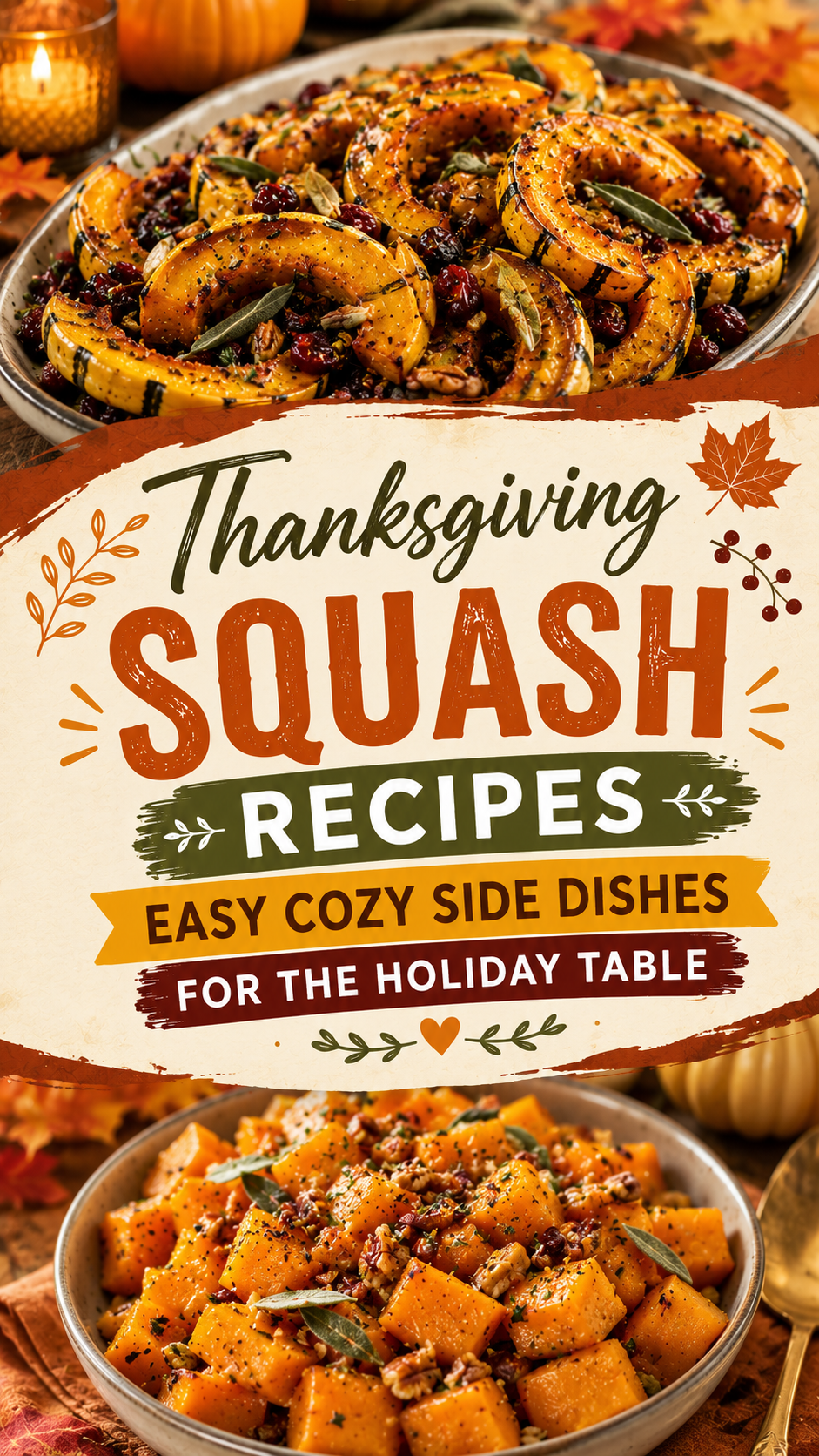
Squash belongs on a Thanksgiving table.
It already has the right colors, the right cozy flavor, and enough natural sweetness to work with everything from sage and Parmesan to maple syrup and cranberries.
The problem is that squash can become very soft and very sweet very quickly.
The better approach is to give it contrast. Crisp edges, savory herbs, something tangy, toasted nuts, or a crunchy topping can turn a basic pan of squash into a side people actually remember.
For these Thanksgiving squash recipes, we’re making maple sage roasted butternut squash, Parmesan garlic acorn squash, cranberry pecan delicata squash, brown butter honey squash, and creamy butternut squash gratin.
Five easy ways to put fall squash to work on the holiday table.
What You’ll Need
Maple Sage Roasted Butternut Squash
- 2 1/2 pounds butternut squash, peeled and cubed
- 2 tablespoons olive oil
- 2 tablespoons pure maple syrup
- 1 tablespoon melted butter
- 1 teaspoon Dijon mustard
- 1 teaspoon dried sage
- 1/2 teaspoon dried thyme
- 3/4 teaspoon salt
- 1/4 teaspoon black pepper
- 1/2 cup chopped pecans
- 2 tablespoons chopped fresh parsley
Parmesan Garlic Acorn Squash
- 2 medium acorn squash
- 3 tablespoons olive oil
- 3 garlic cloves, minced
- 1 teaspoon dried thyme
- 1/2 teaspoon dried rosemary
- 3/4 teaspoon salt
- 1/4 teaspoon black pepper
- 3/4 cup finely grated Parmesan
- 1 tablespoon fresh lemon juice
- 2 tablespoons chopped parsley
Cranberry Pecan Delicata Squash
- 3 medium delicata squash
- 2 tablespoons olive oil
- 1 tablespoon pure maple syrup
- 1/2 teaspoon ground cinnamon
- 3/4 teaspoon salt
- 1/4 teaspoon black pepper
- 1/2 cup dried cranberries
- 1/2 cup chopped pecans
- 1 tablespoon apple cider vinegar
- 1 teaspoon orange zest
- 2 tablespoons chopped fresh parsley
Brown Butter Honey Squash
- 2 1/2 pounds butternut squash, peeled and cubed
- 2 tablespoons olive oil
- 4 tablespoons unsalted butter
- 2 tablespoons honey
- 1 tablespoon fresh orange juice
- 1 teaspoon fresh thyme leaves
- 1/2 teaspoon ground cinnamon
- 3/4 teaspoon salt
- 1/4 teaspoon black pepper
- 1/3 cup toasted walnuts
Creamy Butternut Squash Gratin
- 3 pounds butternut squash
- 2 tablespoons unsalted butter
- 2 garlic cloves, minced
- 1 1/2 cups heavy cream
- 1/2 cup whole milk
- 1 teaspoon Dijon mustard
- 1 teaspoon dried thyme
- 1/4 teaspoon ground nutmeg
- 1 teaspoon salt
- 1/4 teaspoon black pepper
- 1 cup shredded Gruyère
- 1/2 cup grated Parmesan
- 3/4 cup panko breadcrumbs
- 2 tablespoons melted butter
Tools You’ll Need
- Large baking sheets
- 9×13-inch baking dish
- Large mixing bowls
- Small saucepan
- Small mixing bowl
- Chef’s knife
- Cutting board
- Vegetable peeler
- Large spoon
- Whisk
- Rubber spatula
- Measuring cups and spoons
- Citrus zester
- Cheese grater
- Aluminum foil
- Serving spoon
1. Maple Sage Roasted Butternut Squash
Butternut squash and maple syrup are obvious friends.
Sage keeps them from getting too comfortable.
This version has caramelized edges, a lightly sweet glaze, and toasted pecans for crunch.
Preheat the oven to 425°F.
Cut the butternut squash into roughly 1-inch cubes.
Place in a large mixing bowl.
Add olive oil, salt, black pepper, sage, and thyme.
Toss well.
Spread across a large baking sheet in one layer.
Roast for 20 minutes.
Meanwhile, stir together the maple syrup, melted butter, and Dijon mustard.
Remove the pan from the oven.
Drizzle the maple mixture over the squash.
Toss gently.
Return to the oven for another 10 to 15 minutes, until tender and caramelized.
Add the pecans during the final 5 minutes so they toast without burning.
Finish with parsley.
Adding most of the maple toward the end helps prevent the sugar from getting too dark before the squash finishes cooking.
You want caramelized.
Not evidence.
2. Parmesan Garlic Acorn Squash
Acorn squash often gets covered in brown sugar and butter.
Nothing wrong with that.
But it is equally good going completely savory.
Preheat the oven to 425°F.
Cut each acorn squash in half from stem to bottom.
Scoop out the seeds.
Cut the halves into approximately 3/4-inch wedges.
Place the wedges in a large bowl.
Add olive oil, garlic, thyme, rosemary, salt, and black pepper.
Toss gently.
Arrange the squash on a baking sheet without overlapping.
Roast for 20 minutes.
Turn the wedges.
Sprinkle Parmesan over them.
Return to the oven for another 10 to 15 minutes, until the squash is tender and the cheese is golden.
Finish with lemon juice and parsley.
Serve warm.
The skin of acorn squash is edible once properly cooked, though some people prefer eating the flesh and leaving the skin behind.
Either approach is acceptable.
Thanksgiving dinner does not require a squash-skin policy.
Pro Tips for Better Thanksgiving Squash
Cut pieces evenly. Small cubes can become mushy while larger ones are still firm.
Use high heat for roasting. Around 425°F encourages browning before the squash gets too soft.
Give it room. Squash releases moisture. Crowding the pan makes browning much harder.
Add sugary glazes later. Maple syrup and honey can burn before thick pieces of squash finish cooking.
Use something savory or acidic. Mustard, herbs, Parmesan, vinegar, or citrus keeps naturally sweet squash balanced.
3. Cranberry Pecan Delicata Squash
Delicata squash has one major advantage during Thanksgiving prep.
You don’t need to peel it.
That alone deserves some appreciation.
Its striped skin becomes tender when roasted, and the half-moon slices look particularly nice on a holiday platter.
Preheat the oven to 425°F.
Cut the delicata squash in half lengthwise.
Scoop out the seeds.
Cut into roughly 1/2-inch half-moons.
Place in a large bowl.
Add olive oil, maple syrup, cinnamon, salt, and black pepper.
Toss.
Spread across a baking sheet.
Roast for 20 to 25 minutes, turning once.
Meanwhile, toast the pecans in a dry skillet for several minutes until fragrant.
Watch them closely.
Transfer the roasted squash to a serving platter.
Add dried cranberries and toasted pecans.
Drizzle with apple cider vinegar.
Finish with orange zest and parsley.
The vinegar matters here.
Between squash, maple, and cranberries, this dish has plenty of sweetness available.
A little acidity stops the whole situation from wandering toward dessert.
4. Brown Butter Honey Squash
Brown butter gives butternut squash a deeper, nutty flavor without making the recipe complicated.
This version is sweet, but thyme and orange keep it balanced.
Preheat the oven to 425°F.
Place the squash cubes in a large bowl.
Add olive oil, salt, and black pepper.
Toss.
Spread over a baking sheet.
Roast for about 25 to 30 minutes, turning once.
Brown the Butter
While the squash roasts, melt the butter in a small saucepan over medium heat.
Continue cooking.
The butter will foam.
Then the milk solids will begin turning golden brown.
Once it smells nutty and looks amber, remove it from the heat.
Immediately stir in honey, orange juice, thyme, and cinnamon.
When the squash is tender and browned, transfer it to a serving bowl.
Pour the brown butter mixture over it.
Add toasted walnuts.
Toss gently.
Taste before adding anything else.
If it seems too sweet, another small squeeze of orange juice can help.
Brown butter is one of those ingredients that makes a recipe taste as though considerably more work happened.
We don’t need to correct anyone who assumes that.
5. Creamy Butternut Squash Gratin
If roasted squash is the sensible vegetable side, gratin is what happens when squash decides Thanksgiving is a holiday.
Thin slices of butternut squash bake in cream, herbs, Gruyère, and Parmesan under a crunchy breadcrumb topping.
Preheat the oven to 375°F.
Grease a 9×13-inch baking dish.
Peel the butternut squash.
Cut off the neck and slice it into thin rounds, roughly 1/8 inch thick.
For the wider seed end, remove the seeds and cut the flesh into similarly thin pieces.
Try to keep the slices reasonably consistent.
Make the Cream Mixture
Melt 2 tablespoons butter in a saucepan.
Add garlic.
Cook for about 30 seconds.
Add cream, milk, Dijon mustard, thyme, nutmeg, salt, and black pepper.
Heat gently until steaming.
Do not boil.
Arrange about one-third of the squash in the baking dish.
Sprinkle with some Gruyère and Parmesan.
Repeat the layers.
Slowly pour the warm cream mixture over everything.
Cover tightly with foil.
Bake for 40 minutes.
Remove the foil.
Combine panko with 2 tablespoons melted butter.
Sprinkle over the gratin.
Bake uncovered for another 25 to 35 minutes, until the squash is completely tender and the top is golden.
A knife should slide easily through the center.
Let the gratin rest for 10 minutes before serving.
That resting time helps the cream settle instead of immediately running across the plate toward the mashed potatoes.
They have enough going on.
Which Thanksgiving Squash Recipe Should You Make?
Look at the rest of your menu first.
| Recipe | Flavor | Texture | Best For |
|---|---|---|---|
| Maple sage butternut | Sweet-savory | Caramelized | Classic Thanksgiving |
| Parmesan garlic acorn | Savory, herby | Tender with crisp edges | Rich holiday menus |
| Cranberry pecan delicata | Sweet-tart | Tender with crunch | Colorful holiday table |
| Brown butter honey | Nutty, lightly sweet | Soft and caramelized | Turkey or ham |
| Butternut gratin | Creamy and cheesy | Rich and tender | Comfort-food dinners |
If you already have sweet potato casserole and cranberry sauce, Parmesan garlic acorn squash gives you a savory option.
If the rest of dinner is mostly traditional, maple sage butternut squash fits right in.
Cranberry pecan delicata looks especially good on a serving platter.
Brown butter squash pairs nicely with Thanksgiving ham.
And the gratin works when you want squash to take up serious casserole territory.
Which Squash Is Best for Thanksgiving?
There isn’t one winner.
Different varieties are better for different recipes.
Butternut Squash
Sweet, smooth, and easy to cube once peeled.
Good for:
- Roasting
- Mashing
- Gratins
- Soups
- Casseroles
Acorn Squash
Slightly milder with a firmer texture.
Good for:
- Roasted wedges
- Stuffed squash
- Savory preparations
Delicata Squash
Smaller and quicker to prepare.
The thin skin is edible.
Good for:
- Roasted rings
- Half-moons
- Salads
- Holiday platters
Kabocha Squash
Dense, sweet, and slightly nutty.
It is excellent roasted and can replace butternut in many recipes.
Just remember that different squash varieties cook at slightly different rates.
Check tenderness rather than treating the timer like a legal contract.
How to Safely Cut Butternut Squash
Butternut squash is delicious.
It is also surprisingly committed to being difficult to cut.
Start with a stable cutting board.
Cut a thin slice from the top and bottom so you have flat surfaces.
Separate the narrow neck from the rounded bottom if that makes handling easier.
Peel with a sturdy vegetable peeler.
Cut the squash in half.
Scoop the seeds from the rounded portion.
Then cut into slices or cubes.
Do not rush this part.
If the squash is especially difficult to cut, carefully microwaving the whole squash for a couple of minutes can slightly soften the exterior. Let it cool enough to handle before cutting.
Keep your fingers away from the knife’s path and work on a surface that does not slide.
The recipe can wait another minute.
How to Get Caramelized Squash Instead of Mushy Squash
Moisture is the enemy of browning.
After cutting the squash, pat it dry if the surface seems wet.
Use a large baking sheet.
Keep everything in one layer.
Leave a little room between pieces.
Then roast at 425°F.
Do not line the pan with a deep pool of glaze before roasting.
Sugary liquid encourages softening and can burn.
A light coating of oil is enough at the beginning.
Add maple, honey, or other glazes toward the end.
You get better browning and more control over sweetness.
Can You Eat Squash Skin?
It depends on the variety.
Delicata: Yes. The skin becomes tender when roasted.
Acorn: Yes, although some people prefer not to eat it.
Butternut: Technically edible when cooked, but peeling is generally preferable for these recipes.
Kabocha: The skin is edible once thoroughly cooked.
For a holiday meal, think about texture as much as edibility.
Something being edible does not automatically mean it gives you the nicest gratin.
Make-Ahead Thanksgiving Squash
Squash can save you a lot of Thanksgiving morning prep.
Two Days Before
You can:
- Peel butternut squash
- Cut squash into cubes
- Scoop seeds from acorn or delicata squash
- Toast nuts
- Grate cheese
- Prepare glazes
Store cut squash covered in the refrigerator.
One Day Before
Assemble the butternut gratin.
Cover tightly and refrigerate.
Keep the breadcrumb topping separate so it stays dry.
You can also prepare the maple or brown butter components ahead and refrigerate them separately.
Thanksgiving Day
Roast the squash fairly close to serving time.
Add glazes and crunchy toppings near the end.
Bake the gratin until completely hot and tender.
If it goes into the oven cold from the refrigerator, expect it to need some additional baking time.
Use tenderness and temperature rather than relying only on the original timer.
How Much Squash Do You Need Per Person?
For a Thanksgiving side, plan around 1/3 to 1/2 pound of raw squash per person, allowing for some trimming and seeds.
For 8 people, around 2 1/2 to 3 pounds is usually comfortable.
For 12 people, plan around 4 pounds.
For 16 people, around 5 to 6 pounds gives you a generous amount.
You can make less if there are many other sides.
Thanksgiving portions are unusual because everyone wants a little of everything.
Then somehow fits pie afterward.
Science has chosen not to investigate too closely.
How to Balance Sweet Squash Recipes
Winter squash already contains natural sweetness.
Roasting makes it taste even sweeter.
So maple syrup, honey, and brown sugar should be used with some restraint.
Balance sweetness with:
- Dijon mustard
- Apple cider vinegar
- Lemon juice
- Orange juice
- Black pepper
- Parmesan
- Sage
- Thyme
- Rosemary
Even a small amount of acidity can make a big difference.
If a finished squash dish tastes flat or overly sweet, try a teaspoon or two of vinegar or citrus juice before adding more salt or sugar.
Substitutions and Variations
Butternut squash: Kabocha or another firm winter squash can work in many roasted recipes.
Pecans: Use walnuts or pumpkin seeds.
Walnuts: Pecans work equally well.
Dried cranberries: Try dried cherries.
Maple syrup: Honey can substitute.
Honey: Pure maple syrup works.
Gruyère: Use Swiss cheese or sharp white cheddar.
Parmesan: Pecorino Romano can work, though it is saltier.
Heavy cream: Replace some with whole milk for a lighter gratin.
Sage: Thyme or rosemary can work.
Orange juice: Apple cider makes a good fall-flavored alternative.
For nut-free recipes, simply leave out the nuts or use toasted pumpkin seeds if suitable.
For gluten-free gratin, replace the panko with a gluten-free breadcrumb alternative.
What to Serve With Thanksgiving Squash
Squash works particularly well with classic holiday flavors.
Serve it alongside:
- Roast turkey
- Thanksgiving ham
- Stuffing
- Mashed potatoes
- Green beans
- Brussels sprouts
- Cranberry sauce
- Thanksgiving gravy
- Mac and cheese
- Dinner rolls
- Roasted carrots
- Thanksgiving salad
For rich squash gratin, choose lighter vegetables elsewhere on the plate.
For roasted savory squash, you have more room for creamy potatoes or mac and cheese.
If you’re serving sweet potato casserole, consider choosing one of the savory squash recipes.
Two orange vegetables do not both need to arrive covered in sugar.
Leftovers and Storage
Refrigerate cooked squash within 2 hours of serving.
Store leftovers in airtight containers in the refrigerator.
Use within 3 to 4 days.
For roasted squash, reheat on a baking sheet at 375°F to 400°F until hot.
This gives you a better texture than microwaving.
The gratin can be covered and reheated at 350°F until the center reaches 165°F.
Remove the cover toward the end if you want to crisp the topping.
Leftover roasted squash is also useful in:
- Grain bowls
- Salads
- Frittatas
- Soups
- Pasta
- Turkey bowls
- Breakfast hash
You can also mash leftover butternut squash with butter and herbs.
No need to turn every Thanksgiving leftover into a seven-step reinvention.
Frequently Asked Questions
What squash is good for Thanksgiving?
Butternut, acorn, delicata, and kabocha squash are all good holiday options.
What is the easiest squash to prepare?
Delicata is especially convenient because you generally don’t need to peel it.
What temperature should I roast squash at?
425°F works well for caramelized roasted squash.
How long does butternut squash take to roast?
One-inch cubes generally need about 30 to 35 minutes at 425°F, depending on size.
Do I need to peel butternut squash?
For these recipes, peeling is recommended.
Can I prepare Thanksgiving squash ahead?
Yes. Most squash can be peeled and cut one or two days ahead and kept refrigerated.
Why did my roasted squash turn mushy?
The pieces may have been too small, overcrowded, covered in too much liquid, or cooked too long.
Can I make butternut squash gratin the day before?
Yes. Assemble and refrigerate it, keeping the breadcrumb topping separate until baking.
How much squash should I make per person?
Around 1/3 to 1/2 pound of raw squash per person is a useful starting point for Thanksgiving.
How long does leftover squash last?
Properly refrigerated cooked squash is generally best used within 3 to 4 days.
Wrapping Up
Squash has enough natural fall flavor that it doesn’t need much convincing to fit into Thanksgiving dinner.
Make maple sage roasted butternut squash when you want a simple sweet-savory side.
Choose Parmesan garlic acorn squash when the rest of the table already has plenty of sweetness.
Try cranberry pecan delicata squash for something colorful with a little crunch.
Go with brown butter honey squash when you want a richer holiday flavor.
Or make creamy butternut squash gratin when there’s still room on the table for one more casserole.
Give roasted squash plenty of space.
Save sugary glazes for later in cooking.
And don’t forget a little salt, herbs, or acidity to balance its natural sweetness.
Do that, and squash stops feeling like the side you added because it’s November.
It earns the space beside the turkey.