There is a point every fall when dinner starts needing a little more substance.
The salads get smaller. The sweaters come out. And suddenly a bowl of pasta covered in mushrooms, roasted squash, browned butter, or a creamy sauce sounds considerably more appropriate.
Fall pasta is especially useful because it gives you comfort food without automatically creating a two-hour cooking project.
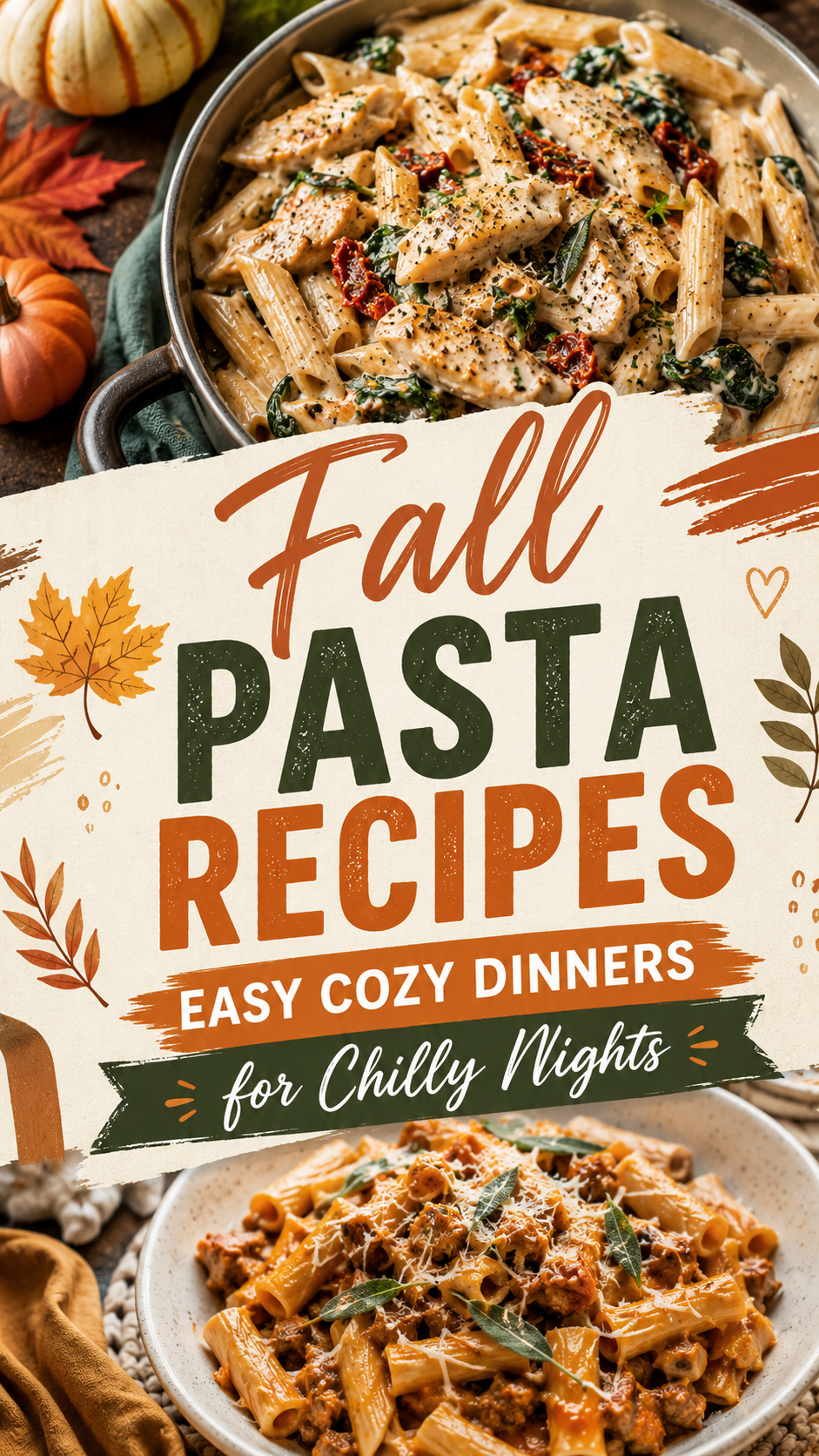
These five fall pasta recipes use seasonal ingredients but stay realistic enough for an ordinary weeknight: creamy butternut squash pasta, garlic mushroom Parmesan pasta, pumpkin sausage rigatoni, brown butter sweet potato pasta, and creamy chicken spinach pasta.
Most are ready in about 30 to 45 minutes.
More importantly, each one tastes different enough that you’re not eating the same cream sauce five times under different names.
1. Creamy Butternut Squash Pasta With Sage
Butternut squash makes an excellent pasta sauce because once blended, it becomes naturally creamy without needing a huge amount of cream.
Sage gives it that unmistakable fall flavor.
Parmesan handles the rest.
What You’ll Need
- 12 ounces rigatoni or penne
- 3 cups peeled and cubed butternut squash
- 2 tablespoons olive oil
- 1 small yellow onion, chopped
- 3 garlic cloves, minced
- 1 teaspoon chopped fresh sage
- 1/2 teaspoon dried thyme
- 1 cup chicken or vegetable broth
- 1/2 cup heavy cream
- 3/4 cup grated Parmesan
- 1/4 teaspoon ground nutmeg
- 3/4 teaspoon salt
- 1/4 teaspoon black pepper
- 1 tablespoon fresh lemon juice
- 1/3 cup toasted walnuts, optional
Make the Pasta
Bring a large pot of salted water to a boil.
Cook the pasta until al dente.
Before draining, reserve about 1 cup of pasta water.
Meanwhile, heat olive oil in a large skillet over medium heat.
Add the onion and cook for about 4 minutes.
Add the butternut squash.
Cook for another 3 minutes.
Add garlic, sage, thyme, broth, salt, and black pepper.
Cover and simmer for 12 to 15 minutes, until the squash is very tender.
Transfer the mixture carefully to a blender and blend until smooth, or use an immersion blender.
Return the sauce to low heat.
Stir in the cream, Parmesan, and nutmeg.
Add the cooked pasta.
Toss until thoroughly coated.
Use a little reserved pasta water if the sauce needs loosening.
Finish with lemon juice.
Top with walnuts and extra Parmesan if you like.
Don’t skip the little bit of lemon. Squash, cream, and Parmesan are all fairly rich. That small hit of acidity wakes everything back up.
2. Garlic Mushroom Parmesan Pasta
Some fall dinners don’t need pumpkin, maple syrup, or apples to announce what season it is.
Mushrooms can handle that job.
This pasta is earthy, garlicky, and creamy without becoming excessively heavy.
What You’ll Need
- 12 ounces fettuccine, linguine, or spaghetti
- 16 ounces cremini mushrooms, sliced
- 2 tablespoons olive oil
- 2 tablespoons unsalted butter
- 4 garlic cloves, minced
- 1 teaspoon dried thyme
- 1/2 cup chicken or vegetable broth
- 3/4 cup heavy cream
- 1 cup grated Parmesan
- 1 tablespoon fresh lemon juice
- 1/2 teaspoon salt
- 1/2 teaspoon black pepper
- 2 tablespoons chopped parsley
Make the Pasta
Cook the pasta in well-salted water until al dente.
Reserve 1 cup pasta water before draining.
While the pasta cooks, heat olive oil in a large skillet over medium-high heat.
Add the mushrooms.
Spread them out and leave them alone for a couple of minutes.
Then stir.
Continue cooking for 7 to 9 minutes, until their released moisture has evaporated and the mushrooms are properly browned.
Add butter.
Stir in garlic and thyme.
Cook for about 30 seconds.
Pour in the broth.
Scrape up any browned bits from the skillet.
Add the cream.
Reduce the heat and simmer gently for 2 to 3 minutes.
Add Parmesan.
Stir until smooth.
Add the pasta and toss.
Use reserved pasta water as needed until the sauce becomes glossy and coats the noodles.
Finish with lemon juice, black pepper, and parsley.
Taste before adding more salt because Parmesan is already doing plenty of work.
Give the Mushrooms Some Space
If you’re doubling this recipe, cook the mushrooms in batches.
A crowded skillet traps moisture.
Instead of browned mushrooms, you get a pan full of gray mushroom steam.
Still food.
Considerably less exciting food.
3. Pumpkin Sausage Rigatoni
Pumpkin pasta sounds like it might wander dangerously close to dessert.
It doesn’t.
Not once Italian sausage, garlic, Parmesan, sage, and plenty of black pepper get involved.
The pumpkin makes the sauce silky and slightly sweet while the sausage keeps everything firmly in dinner territory.
What You’ll Need
- 12 ounces rigatoni
- 1 pound Italian sausage
- 1 tablespoon olive oil, if needed
- 1 small onion, finely chopped
- 3 garlic cloves, minced
- 1 teaspoon dried sage
- 1/2 teaspoon dried thyme
- 1 cup plain pumpkin puree
- 1 cup chicken broth
- 1/2 cup heavy cream
- 3/4 cup grated Parmesan
- 1/4 teaspoon ground nutmeg
- 1/2 teaspoon black pepper
- Salt as needed
- 2 tablespoons chopped parsley
Make the Pasta
Cook the rigatoni until al dente.
Reserve about 1 cup pasta water.
Heat a large skillet over medium-high heat.
Add the sausage.
Cook, breaking it into small pieces, until thoroughly cooked and browned.
If using pork sausage, cook it to at least 160°F. Poultry sausage should reach 165°F.
Transfer excess grease from the pan if necessary.
Add the onion.
Cook for about 4 minutes.
Stir in garlic, sage, and thyme.
Cook for another 30 seconds.
Reduce the heat to medium-low.
Add pumpkin puree and chicken broth.
Stir until smooth.
Add the cream, Parmesan, nutmeg, and black pepper.
Let the sauce simmer gently for several minutes.
Add the pasta.
Toss thoroughly.
If the sauce becomes too thick, add pasta water a little at a time.
Taste before adding salt.
Sausage and Parmesan can already bring plenty.
Finish with parsley and another crack of black pepper.
One Important Pumpkin Rule
Use plain pumpkin puree.
Do not use pumpkin pie filling.
They sit suspiciously close together at the grocery store, but they have extremely different plans for your rigatoni.
A Few Pasta Tricks Worth Knowing
Fall pasta tends to involve thick sauces, cheese, roasted vegetables, and creamier ingredients.
A few small techniques make a noticeable difference.
Save pasta water before draining. The starchy water helps loosen thick sauces while keeping them silky.
Cook pasta just to al dente. It will continue cooking slightly when tossed with hot sauce.
Finish the pasta in the sauce. Don’t simply put plain noodles on a plate and spoon sauce over them.
Grate Parmesan finely. It melts more easily and is less likely to clump.
Keep cheese sauces below a hard boil. Gentle heat gives you a smoother result.
And salt the pasta water.
The noodles themselves need seasoning too.
4. Brown Butter Sweet Potato Pasta With Pecans
This one goes in a different direction.
There is no cream sauce.
Instead, roasted sweet potatoes are tossed with pasta, nutty brown butter, sage, Parmesan, and toasted pecans.
It is cozy without being particularly heavy.
What You’ll Need
- 12 ounces farfalle or orecchiette
- 2 medium sweet potatoes, peeled and cut into 1/2-inch cubes
- 2 tablespoons olive oil
- 3/4 teaspoon salt, divided
- 1/2 teaspoon black pepper
- 5 tablespoons unsalted butter
- 1 tablespoon chopped fresh sage
- 2 garlic cloves, minced
- 1 tablespoon fresh lemon juice
- 3/4 cup grated Parmesan
- 1/2 cup chopped toasted pecans
- 2 tablespoons chopped parsley
Roast the Sweet Potatoes
Heat the oven to 425°F.
Toss the sweet potato cubes with olive oil, about 1/2 teaspoon salt, and black pepper.
Spread them across a large baking sheet.
Roast for 20 to 25 minutes, turning once.
You want tender centers and browned edges.
Cook the Pasta
Meanwhile, cook the pasta until al dente.
Reserve about 1 cup pasta water.
Drain.
Brown the Butter
Place the butter in a large skillet over medium heat.
Let it melt.
The butter will foam.
Keep cooking until small golden-brown flecks appear and it smells nutty.
Immediately lower the heat.
Add sage and garlic.
Cook for about 30 seconds.
Add the pasta and roasted sweet potatoes.
Toss gently.
Add Parmesan and enough pasta water to lightly coat everything.
Finish with lemon juice.
Taste and adjust the salt.
Top with pecans and parsley.
Brown butter works quickly once it starts changing color.
This is not the moment to check your phone.
It has spent several minutes being butter and is suddenly ready to become smoke.
5. Creamy Chicken and Spinach Fall Pasta
This is the practical one.
Chicken makes it filling enough to stand alone as dinner, spinach gives you some greenery, and the Parmesan garlic sauce comes together in the same skillet.
No separate vegetable side is required unless you want one.
What You’ll Need
- 12 ounces penne
- 1 pound boneless, skinless chicken breast
- 1 teaspoon Italian seasoning
- 1/2 teaspoon salt
- 1/4 teaspoon black pepper
- 2 tablespoons olive oil
- 2 tablespoons unsalted butter
- 3 garlic cloves, minced
- 1 cup chicken broth
- 3/4 cup heavy cream
- 1 teaspoon Dijon mustard
- 3/4 cup grated Parmesan
- 4 cups baby spinach
- 1/2 teaspoon dried thyme
- 1 tablespoon fresh lemon juice
Make the Pasta
Cook the penne until al dente.
Reserve some pasta water.
Cut the chicken into bite-sized pieces.
Season with Italian seasoning, salt, and pepper.
Heat olive oil in a large skillet over medium-high heat.
Add the chicken in one layer.
Cook for about 6 to 8 minutes, turning occasionally, until browned and the thickest pieces reach 165°F.
Transfer to a plate.
Reduce the heat.
Add butter and garlic.
Cook for 30 seconds.
Pour in the chicken broth.
Scrape up the browned bits from the skillet.
Add cream, Dijon, and thyme.
Simmer gently for several minutes.
Stir in Parmesan.
Add the spinach.
Cook just until wilted.
Return the chicken to the skillet.
Add the pasta.
Toss until everything is coated.
Use reserved pasta water to adjust the consistency.
Finish with lemon juice.
Serve with extra Parmesan and black pepper.
This is also a good place to add leftover roasted mushrooms, broccoli, or butternut squash.
A weeknight pasta skillet is allowed to perform refrigerator cleanup.
Which Fall Pasta Should You Make Tonight?
Here’s the easier decision.
Want something creamy but meatless?
Make butternut squash pasta.
Have mushrooms that need using?
Make garlic mushroom Parmesan pasta.
Want the heartiest dinner?
Pumpkin sausage rigatoni.
Want something cozy without cream?
Brown butter sweet potato pasta.
Need a complete family dinner in one bowl?
Chicken and spinach pasta.
There is no wrong answer.
There are mostly different levels of Parmesan.
Fall Vegetables That Work Well With Pasta
One useful thing about pasta is how easily you can change it as fall produce comes into season.
Butternut Squash
Roast it or turn it into sauce.
It works particularly well with:
- Sage
- Parmesan
- Brown butter
- Garlic
- Walnuts
Mushrooms
Brown them aggressively rather than gently steaming them.
Pair with:
- Thyme
- Garlic
- Cream
- Parmesan
- Spinach
Sweet Potatoes
Keep them in small cubes so they roast quickly.
Pair with:
- Sage
- Pecans
- Brown butter
- Goat cheese
- Rosemary
Brussels Sprouts
Thinly sliced sprouts can be sautéed and tossed directly into pasta.
They are especially good with bacon, Parmesan, lemon, and garlic.
Cauliflower
Roasted cauliflower works with creamy pasta or simple olive oil-based sauces.
Get it properly brown first.
Pasta does not need another beige ingredient politely disappearing into the background.
How to Make Creamy Pasta Without a Heavy Sauce
Cream is useful.
It is not the only way to make pasta creamy.
Pureed butternut squash and pumpkin both add body.
Reserved pasta water adds starch.
Finely grated Parmesan creates richness.
You can also use:
- Ricotta
- Mascarpone
- Cream cheese
- Greek yogurt in suitable sauces
- Pureed white beans
The goal is not necessarily eliminating cream.
Sometimes cream is exactly what dinner needs.
The useful trick is knowing that a sauce does not need two cups of it to taste rich.
Make-Ahead Tips for Busy Nights
Pasta itself is usually nicest when freshly cooked, but almost everything around it can be prepared early.
The Day Before
You can:
- Peel and cube squash
- Cut sweet potatoes
- Slice mushrooms
- Chop onions
- Grate Parmesan
- Toast pecans or walnuts
- Cut chicken
- Measure herbs and seasonings
Store raw chicken separately and keep it refrigerated.
Earlier the Same Day
Roast squash or sweet potatoes.
Brown sausage.
Prepare pureed butternut squash sauce.
Refrigerate cooked components promptly.
At dinner time, cook fresh pasta and finish everything together.
That gives you the texture of freshly made pasta without starting the entire recipe from zero at 6:30.
Easy Substitutions and Variations
Rigatoni: Penne or ziti works.
Fettuccine: Linguine or spaghetti works.
Butternut squash: Try delicata or another suitable winter squash.
Pumpkin puree: Cooked pureed butternut squash is an easy replacement.
Pecans: Use walnuts.
Parmesan: Pecorino Romano works, though it is saltier.
Heavy cream: Half-and-half can work in some recipes, producing a thinner sauce.
Chicken: Turkey can work in creamy pasta.
Italian sausage: Try chicken or turkey sausage, cooking poultry sausage to 165°F.
Spinach: Chopped kale works but needs longer cooking.
Fresh sage: Dried sage works in smaller amounts.
For vegetarian versions, use vegetable broth and leave out chicken or sausage.
Add mushrooms, white beans, roasted cauliflower, or extra squash instead.
How Much Pasta Should You Cook Per Person?
For pasta served as the main dinner, around 3 to 4 ounces of dry pasta per adult is a useful starting point.
A 12-ounce package generally serves around 3 to 4 hungry adults as a main dish, especially when chicken, sausage, vegetables, or a rich sauce are included.
For bigger families, 16 ounces is often more practical.
If pasta is a side dish, you need less.
And if teenagers are involved, calculations become theoretical.
What to Serve With Fall Pasta
Most of these recipes are substantial enough that they only need something simple.
Try:
- Garlic bread
- Crusty bread
- Green salad
- Roasted broccoli
- Roasted Brussels sprouts
- Green beans
- Caesar salad
- Roasted cauliflower
With rich pasta, a crisp salad is particularly useful.
Use a tangy dressing rather than another creamy one.
Dinner needs contrast.
Creamy pasta beside creamy dressing beside buttery garlic bread is delicious, but eventually someone should invite acidity to the table.
Turning Leftovers Into Lunch
Fall pasta is very good at becoming tomorrow’s lunch.
Creamy pasta usually thickens overnight because the noodles continue absorbing sauce.
Before reheating, add a splash of:
- Milk
- Cream
- Chicken broth
- Vegetable broth
Then reheat gently.
For roasted vegetable pasta, a little olive oil can be enough.
Leftover pasta can also become a baked pasta dish.
Place it in a baking dish, add a little sauce or broth, sprinkle with mozzarella or Parmesan, and bake until hot.
Not every leftover needs a dramatic transformation.
Cheese on top is sometimes the entire strategy.
Leftovers and Storage
Refrigerate cooked pasta dishes within 2 hours.
Store leftovers in airtight containers.
Use them within 3 to 4 days.
For pasta containing chicken or sausage, reheat leftovers to 165°F.
Cream-based sauces are usually better reheated slowly.
High heat can cause the sauce to separate.
Add a splash of liquid and stir frequently.
For pumpkin and squash sauces, expect considerable thickening after refrigeration.
A little broth or pasta water brings them back surprisingly well.
Frequently Asked Questions
What pasta dishes are good for fall?
Pasta with pumpkin, butternut squash, mushrooms, sweet potatoes, sausage, sage, chicken, brown butter, and Parmesan all work well for cooler weather.
Can pumpkin puree be used in savory pasta?
Yes. Plain pumpkin puree makes a creamy sauce and works particularly well with sausage, Parmesan, garlic, sage, and black pepper.
Can I use pumpkin pie filling?
No. Pumpkin pie filling contains added sugar and spices. Use plain pumpkin puree.
What pasta shape works best with creamy fall sauces?
Rigatoni, penne, shells, and orecchiette are excellent because they hold thick sauces well.
How do I stop cream sauce from becoming too thick?
Reserve pasta water and add it gradually while tossing the pasta.
Why is my Parmesan clumping?
The heat may be too high. Reduce the temperature and add finely grated Parmesan gradually.
Can I make fall pasta vegetarian?
Yes. Mushrooms, butternut squash, pumpkin, cauliflower, spinach, and sweet potatoes all make good meatless pasta additions.
Can I prepare pasta ahead?
The components can be prepared early, but pasta generally has the best texture when cooked shortly before serving.
How long does leftover pasta last?
Most cooked pasta dishes can be refrigerated for 3 to 4 days.
What can I add to fall pasta for protein?
Chicken, Italian sausage, turkey, white beans, or chickpeas are easy options.
Wrapping Up
Fall pasta does not need much convincing.
Start with a bowl of creamy butternut squash pasta when you want something smooth and comforting.
Make garlic mushroom Parmesan pasta when you want an easy meatless dinner with plenty of savory flavor.
Try pumpkin sausage rigatoni when you’re hungry enough for something substantial.
Go with brown butter sweet potato pasta when you want fall flavors without another cream sauce.
Or make chicken and spinach pasta when dinner needs to cover protein, vegetables, and pasta in one skillet.
Keep Parmesan in the refrigerator.
Keep a box of pasta in the pantry.
Add whatever squash, mushrooms, greens, or herbs happen to be around.
Chilly nights can handle the rest.